

Wrote an article for S&WCA Journal with the above title. Could not work things out with the Journal editorial staff, so it was never published. In my interviews with Roy I learned some things that I have not seen anywhere else, so wanted to share it with y'all.
Mr. Jinks said his first Smith & Wesson was a .32 Safety Hammerless he acquired from a Rochester policeman while he was working as a lifeguard in Rochester, New York. While living in Rochester Roy became acquainted with Tony Fidd, an avid and experienced collector and dealer. Mr. Jinks referred to him as a mentor and said he taught him the art of collecting.
Roy went to Syracuse University on a swimming scholarship and competed in the 1954 Olympic Trials in the backstroke event.
His first job out of college was with Eastman Kodak in Rochester. His father also worked at Kodak and introduced him to a friend and co-worker named Rufus Wesson. Mr. Jinks asked Mr. Wesson if he was any relation to the Wessons of Smith & Wesson fame. He said, "Why yes, my great-grandfather was D. B. Wesson." Rufus arranged Roy's first visit to the Smith & Wesson factory in 1957. Through the visit Mr. Jinks met a lot of the Wesson family, including the plant manager Dan Wesson. He said that was the beginning of his close relationship with S&W.
Roy began writing factory history letters in 1966 while working for the GAF Corp. in Binghamton, New York. He started attending the Gun Report shows and met a lot of S&W collectors there. "The Gun Report" was a gun magazine that sponsored some gun shows. The collectors encouraged him to pass on the data he was acquiring from going to the Smith & Wesson factory once a month. In 1968 he started sending a newsletter to collectors. They were called by a couple of different titles, but mainly "From the Desk of Roy Jinks."
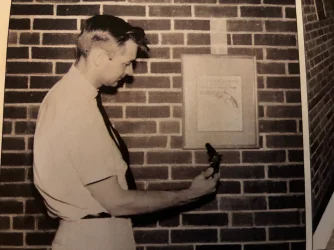
Mr. Jinks told me about taking his collection to a local antique show in Green, New York in 1968. He sent me a couple of photos of the collection plus a young Roy holding a Model 1.
Mr. Jinks wore a number of hats at S&W. He told me that besides Historian he had been in charge of the Service Department, the Sales Department and was Handgun Product Manager.
Roy told me that he was fond of Texas and was made an Honorary Texan by Proclamation of the Governor. He was also an Honorary Texas Ranger. Besides working with the Rangers on the Texas Ranger Commemorative Model 19 he did a fair amount of work at the Texas Ranger Hall of Fame in Waco, Texas. He mentioned spending time with good friends and fellow S&W collectors John Wilson and Dr. John Hall. Besides being Texans they were both Founding Members of the S&WCA. Mr. Wilson was the grandfather of current S&WCA Director Lynn Wood.
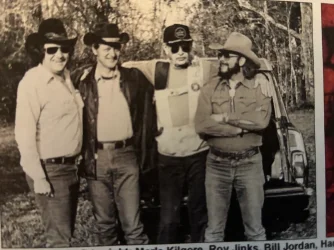
Mr. Jinks was a well known handgun hunter. He told me his hunting companions included Hank Williams, Jr., Bill Jordan and Jimmy Clark. Sent me some nice pictures. One of Hank Jr., Jordan and Roy and another of Hank, Jr. and Roy at Mr. Williams house.
In 1989 Mr. Jinks started the Masters International Shooting Championship. "The Masters" was an annual competition featuring competitive pistol shooting events. The S&W team included Jerry Miculek and Brian Enos. He said this was one of the things he was most proud of.
Roy told me a great Bill Jordan story. As president of the Interstate Pistol Association, he had arranged for Bill to come to Johnson City, New York to do his show for the IPA. Because of the Sullivan Act he could not bring his guns to New York. The Sullivan Act was a New York state law that made it a felony to carry an unlicensed weapon. Mr. Jinks had to buy two guns for the demonstration. They were designed to fire wax bullets and had tuned actions. S&W was about two years behind production at the time, so to get two guns on short notice was quite a feat. Roy held the targets and Bill shot them out of his hand. If he was holding a card, Jordan put a hole in it. He said, "It was some experience, but I had watched Jordan do his act many times and I was very confident he would only hit the target."
In 1972 the old S&W factory buildings were going to be torn down by the City of Springfield. Mr. Jinks was able to buy the factory for a dollar. This enabled him to save many S&W related treasures. He had D. B. Wesson's office disassembled and recreated in his home which included D. B. Wesson's desk, the fireplace, the rugs, the S&W logo that was over the fireplace, the chestnut paneling and many artifacts. He also found a library of volumes containing every firearms patent issued in the United States from June 29, 1832 to May 17, 1921.
In 1979 or 1980 Roy donated around 200,000 documents to the Museum of Springfield History. He retained about 100,000 documents at home. What documents they were! Letters from the Western frontier. Sheriffs and cavalry officers writing to Smith & Wesson. Some Civil War correspondence, a letter from Annie Oakley and letters from D. B. Wesson while he was in Russia. In 1996 Roy got S&W to donate much of the factory collection to the Museum.
Mr. Jinks had a close relationship with the Wesson family. When they decided to part with D. B. Wesson's artifacts they turned them over to Roy for merely assuming the responsibility for their storage. In the treasure trove were diaries, D. B. Wesson's will, his "day book" and some of the most important U. S. A. patents in firearms history. The original patent for the rimfire cartridge held by Horace Smith and D. B. Wesson and the Rollin White patent for the "bore through cylinder."
I asked Roy about awards he had received. He said, "Oh yeah, I've got some around here somewhere, I'll have to look." The one he mentioned was The Outstanding American Handgunner Award he received in 1994 for his lifetime of work to promote handgun shooting and his work as Smith & Wesson's Historian.
Dr. Jinks will be greatly missed. There will never be another like him.
Mr. Jinks said his first Smith & Wesson was a .32 Safety Hammerless he acquired from a Rochester policeman while he was working as a lifeguard in Rochester, New York. While living in Rochester Roy became acquainted with Tony Fidd, an avid and experienced collector and dealer. Mr. Jinks referred to him as a mentor and said he taught him the art of collecting.
Roy went to Syracuse University on a swimming scholarship and competed in the 1954 Olympic Trials in the backstroke event.
His first job out of college was with Eastman Kodak in Rochester. His father also worked at Kodak and introduced him to a friend and co-worker named Rufus Wesson. Mr. Jinks asked Mr. Wesson if he was any relation to the Wessons of Smith & Wesson fame. He said, "Why yes, my great-grandfather was D. B. Wesson." Rufus arranged Roy's first visit to the Smith & Wesson factory in 1957. Through the visit Mr. Jinks met a lot of the Wesson family, including the plant manager Dan Wesson. He said that was the beginning of his close relationship with S&W.
Roy began writing factory history letters in 1966 while working for the GAF Corp. in Binghamton, New York. He started attending the Gun Report shows and met a lot of S&W collectors there. "The Gun Report" was a gun magazine that sponsored some gun shows. The collectors encouraged him to pass on the data he was acquiring from going to the Smith & Wesson factory once a month. In 1968 he started sending a newsletter to collectors. They were called by a couple of different titles, but mainly "From the Desk of Roy Jinks."
Mr. Jinks told me about taking his collection to a local antique show in Green, New York in 1968. He sent me a couple of photos of the collection plus a young Roy holding a Model 1.
Mr. Jinks wore a number of hats at S&W. He told me that besides Historian he had been in charge of the Service Department, the Sales Department and was Handgun Product Manager.
Roy told me that he was fond of Texas and was made an Honorary Texan by Proclamation of the Governor. He was also an Honorary Texas Ranger. Besides working with the Rangers on the Texas Ranger Commemorative Model 19 he did a fair amount of work at the Texas Ranger Hall of Fame in Waco, Texas. He mentioned spending time with good friends and fellow S&W collectors John Wilson and Dr. John Hall. Besides being Texans they were both Founding Members of the S&WCA. Mr. Wilson was the grandfather of current S&WCA Director Lynn Wood.
Mr. Jinks was a well known handgun hunter. He told me his hunting companions included Hank Williams, Jr., Bill Jordan and Jimmy Clark. Sent me some nice pictures. One of Hank Jr., Jordan and Roy and another of Hank, Jr. and Roy at Mr. Williams house.
In 1989 Mr. Jinks started the Masters International Shooting Championship. "The Masters" was an annual competition featuring competitive pistol shooting events. The S&W team included Jerry Miculek and Brian Enos. He said this was one of the things he was most proud of.
Roy told me a great Bill Jordan story. As president of the Interstate Pistol Association, he had arranged for Bill to come to Johnson City, New York to do his show for the IPA. Because of the Sullivan Act he could not bring his guns to New York. The Sullivan Act was a New York state law that made it a felony to carry an unlicensed weapon. Mr. Jinks had to buy two guns for the demonstration. They were designed to fire wax bullets and had tuned actions. S&W was about two years behind production at the time, so to get two guns on short notice was quite a feat. Roy held the targets and Bill shot them out of his hand. If he was holding a card, Jordan put a hole in it. He said, "It was some experience, but I had watched Jordan do his act many times and I was very confident he would only hit the target."
In 1972 the old S&W factory buildings were going to be torn down by the City of Springfield. Mr. Jinks was able to buy the factory for a dollar. This enabled him to save many S&W related treasures. He had D. B. Wesson's office disassembled and recreated in his home which included D. B. Wesson's desk, the fireplace, the rugs, the S&W logo that was over the fireplace, the chestnut paneling and many artifacts. He also found a library of volumes containing every firearms patent issued in the United States from June 29, 1832 to May 17, 1921.
In 1979 or 1980 Roy donated around 200,000 documents to the Museum of Springfield History. He retained about 100,000 documents at home. What documents they were! Letters from the Western frontier. Sheriffs and cavalry officers writing to Smith & Wesson. Some Civil War correspondence, a letter from Annie Oakley and letters from D. B. Wesson while he was in Russia. In 1996 Roy got S&W to donate much of the factory collection to the Museum.
Mr. Jinks had a close relationship with the Wesson family. When they decided to part with D. B. Wesson's artifacts they turned them over to Roy for merely assuming the responsibility for their storage. In the treasure trove were diaries, D. B. Wesson's will, his "day book" and some of the most important U. S. A. patents in firearms history. The original patent for the rimfire cartridge held by Horace Smith and D. B. Wesson and the Rollin White patent for the "bore through cylinder."
I asked Roy about awards he had received. He said, "Oh yeah, I've got some around here somewhere, I'll have to look." The one he mentioned was The Outstanding American Handgunner Award he received in 1994 for his lifetime of work to promote handgun shooting and his work as Smith & Wesson's Historian.
Dr. Jinks will be greatly missed. There will never be another like him.
Last edited:


