
Any secrets to successfully reloading .32-20?

daveboy

Member
Joined
Sep 5, 2024
Messages
517
Reaction score
1,474
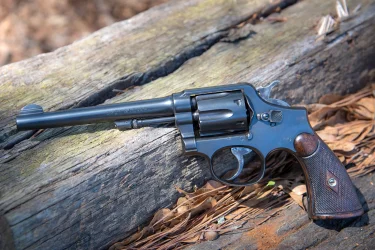
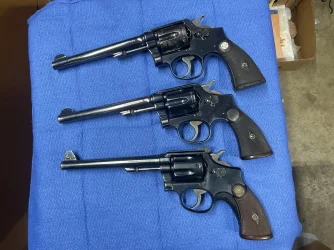
I've been reloading for almost forty years for revolvers, auto pistols, rifles, etc... I'm preparing to jump off the cliff into loading for my vintage S&W and also Colt revolvers. I keep reading about how difficult this cartridge is to reload. I'm about to order some 100 gr., cast-lead bullets. I have some brass, primers, and a quanity of Titegroup powder. I am ordering some Lee dies, which are the only brand of dies I have ever used. Please tell me what I should be aware of, the pitfalls, the cautions, the mistakes you've made...particularlyDSC_3911.webpDSC_3488.webp why .32-20 is any different than any other cartridge. Many thanks.
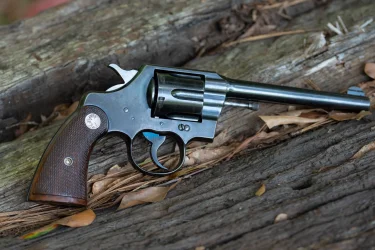
 
I reload 32-20 for a 1902 M&P 4" and a Colt PPS 6" from 1919 with lead bullets only. I load HV Jacketed rounds for a 1990's Marlin 1984. That way, NO MATTER WHAT I can tell which rounds belong to which guns.

Some people complain that the 10/1000" inch wall thickness of the necks can buckle easy, but as long as you don under or over lube the cases you won't have any problems on post WW II brass!

Different brands and different batches of brass will most likely be slightly different lengths, this might be the source of the crunch problems. Either segregate the brass by length or trim to the manual's "Trim To" length.

I don't know production years for Colt 32-20s, but no S%W revolvers were made after 1929 (many didn't get shipped until years later) so all S&Ws are before the heat-treated cylinders and need to be loaded to the pistol only loadings, in other words: NO HIGH VELOCITY RIFLE LOADS! These are 100 years old or older. They say the thick walls of the Single Action Army will handle the HV rounds but would mistreat one of those either.

The traditional 32-20 aka 32 WCF uses a 115 to 117 grain RNFP all lead bullet sized .314" (this same bullet is the correct bullet for the Colt "32 New Police" loading of 32 S&W Long) The 100 grain loading may be a little tricky getting adjusted to the fixed sights on the majority of revolvers. I have always used a very solid roll crimp on my revolver ammo, even though the recoil isn't much, ammo could be damaged in storage or long term in gun belt loops.

Over the years I had shell holder issues with different brand of casings and old "Balloon Head" rim thicknesses. However, all the ammo and brass since the 1970's has fit fine. The Lee shell holders for their dies and primer tools have all worked very well.

Enjoy you "Classic" cartridge!

Ivan
 
I reload 32-20 for a 1902 M&P 4" and a Colt PPS 6" from 1919 with lead bullets only. I load HV Jacketed rounds for a 1990's Marlin 1984. That way, NO MATTER WHAT I can tell which rounds belong to which guns.

Some people complain that the 10/1000" inch wall thickness of the necks can buckle easy, but as long as you don under or over lube the cases you won't have any problems on post WW II brass!

Different brands and different batches of brass will most likely be slightly different lengths, this might be the source of the crunch problems. Either segregate the brass by length or trim to the manual's "Trim To" length.

I don't know production years for Colt 32-20s, but no S%W revolvers were made after 1929 (many didn't get shipped until years later) so all S&Ws are before the heat-treated cylinders and need to be loaded to the pistol only loadings, in other words: NO HIGH VELOCITY RIFLE LOADS! These are 100 years old or older. They say the thick walls of the Single Action Army will handle the HV rounds but would mistreat one of those either.

The traditional 32-20 aka 32 WCF uses a 115 to 117 grain RNFP all lead bullet sized .314" (this same bullet is the correct bullet for the Colt "32 New Police" loading of 32 S&W Long) The 100 grain loading may be a little tricky getting adjusted to the fixed sights on the majority of revolvers. I have always used a very solid roll crimp on my revolver ammo, even though the recoil isn't much, ammo could be damaged in storage or long term in gun belt loops.

Over the years I had shell holder issues with different brand of casings and old "Balloon Head" rim thicknesses. However, all the ammo and brass since the 1970's has fit fine. The Lee shell holders for their dies and primer tools have all worked very well.

Enjoy you "Classic" cartridge!

Ivan
Thank you very much! Great info.
 
Two .32-20s here, a Colt SAA Bisley Model and a Winchester 1892 carbine. My mold makes a 115-grain RN-FP-GC bullet. I played with gas checks for some time, then decided they are not necessary with a moderately hard alloy, dropping from the mold at .313" and 111 grains. Lubed with NRA-Alox and not sized. (Same bullet works nicely in .30 Carbine when sized to .310").

RCBS FL dies and a Lyman M-die for case mouth flaring. No problems with the thin necks when the case mouths allow the bullets to sit up straight in the loading block when inserted by hand. Seat to desired length and moderate crimp.

I'm still using an old batch of Unique so I won't talk about powder charges that you won't be able to duplicate. I produce one modest load that works nicely in both the Colt revolver and Winchester carbine. I see nothing to be gained by trying to hot-rod the old timers, and .32-20 is not a high-performance cartridge anyway.
 
I just started loading 32-20 for a Marlin 1894. It was a great deal at Cabela's and perfect for lever action silhouette. I also heard to cautions about how tricky 32-20 is to load. None of it materialized. I've handloaded a lot of different cartridges. In my limited experience with the 32-20 it's just like any other cartridge. Follow careful loading practices and you should be fine.
 
Last edited:
I use the RCBS Cowboy dies and have had no problems. Unique powder, 115 gr lead gas check bullets and very good accuracy out of my model 1905. Don't get in a rush loading the more delicate 32-20.
 
Even though you need to use pistol data, remember it's a rifle cartridge. In the 1905 4th Change I had (sold several years ago), factory or full-length resized rounds would have the shoulder blown forward a bit on firing. I switched to partial sizing, and this helped with case life. I also ran (IIRC) .313" cast bullets.

W-W brass was okay, as was R-P nickel brass. I had a batch of R-P non-nickel brass that was really soft, but I think that was an outlier. If Starline offers .32-20, I'd go with them.
 
Even though you need to use pistol data, remember it's a rifle cartridge. In the 1905 4th Change I had (sold several years ago), factory or full-length resized rounds would have the shoulder blown forward a bit on firing. I switched to partial sizing, and this helped with case life. I also ran (IIRC) .313" cast bullets.

W-W brass was okay, as was R-P nickel brass. I had a batch of R-P non-nickel brass that was really soft, but I think that was an outlier. If Starline offers .32-20, I'd go with them.
Starline does sell 32-20 brass. I've been using it exclusively. Perhaps it's the reason I haven't had the "case crunching" problems others have had.
 
I reload 32 WCF for four revolvers. I use Unique in all mine, I have Titegroup but never tried it. The secret is trimming all the cases to the same length. Starline cases are the shortest so all of them are trimmed to that length.
 
My process is probably more complicated than it should be. I removed the neck expander/ decapper from my FL die so separate steps are needed for de-cap using a universal die, then FL size and neck expand with Lyman M die. Also, I keep the seating die backed off for no crimp then crimp with a Lee factory crimp collet die. I use Starline brass and with this process never lose any brass. The collet crimp does away with the need for ultra precise case length. As long as it's under maximum length it's safe. I have convinced myself that a typical FL die expander plug will stretch thin brass like the .32-20, .25-20 and ,22 Hornet so I use my work around for all of them or use a Lee collet neck size die if available.
I'm loading for a Colt OP, Ruger Blackhawk convertible and Marlin 1894 CL. It's a fun cartridge and very accurate, enjoy it.
 
Slow and easy, those tender mouths are very much akin to 22 hornet and all of its many variants. Be gentle with your die pressure, its a relatively easy process you just need to not be ham handed. I'm also very gentle with the crimping process and with some applications like with contender barrels or single shot rifles I do not crimp at all. A crimp is really only necessary with a revolver to avoid bullet creep, just enough to keep the bullet in the position it was loaded to avoid movement when firing the rounds following the first. With my Model 92 Winchester I also need a crimp if loading in the tubular magazine, however if test firing single feed not so much. Some will advocate for a slight crimp in order to get the most out of your powder charge, with a single shot pistol that is certainly open for debate, the amount of extra effort is negated by the short barrel and then again if you change to a different powder that is faster burning you can alleviate all that. In the end find what produces the best results and as with all reloading techniques start low and work your way up. I do not mix cartridges that are used in rifles with anything that goes in a revolver. I can use the hottest rounds I load in my Contender barrels and Winchester Model 92.
32-20 is fun to mess around with, as is 22 hornet and its variants. I mess around with a .218 Bee which can use 32-20 and 25-20 as parent cases but I have found you end up loosing more cases than keeping because they do not come up to the minimum case length. My best results are from using factory .218 Bee cases then its all good. I'm now messing around with a K-Hornet barrel because a friend left a few Contender barrels with me along with a good supply of already formed cases and I will admit that I must be a bit of a masochist because forming cases from 22 Hornet as with any of the aforementioned cases is a lesson in patience and loss.
I would have to say that for someone just starting out in reloading the cartridges in the 22-Hornet and 32-20 field are good exercises in learning the craft, you end up learning little things along the way that are very interesting to say the least. How to avoid denting cases while resizing by using the least amount of case lube possible is one little thing I learned, you can mess around with everything from Vasoline to Imperial Case Lube. When forming 22 K-Hornet I learned just the other day to wet your finger with gun oil, rub your fingers together just enough to feel the oily presence, then rub the end of the case where your bullet fits into where it will reform itself to the K-Hornet chamber, then fire-form that cartridge. That is just enough lube to help the brass form into the chamber fully which can then be removed and is now ready to be reloaded as K-Hornet which gives you a whopping 100 fps over standard Hornet speeds. Im going down a rabbit hole with all this explanation but thats what happened to me and its not a lesson in futility, some of us find it fun and just enough of a challenge to spend time with. You can then put on your big boy pants and take up cast bullets and really start reloading. As one old boy once told me "If your not casting your own bullets, your not truly reloading, your just replacing parts."
 
Someone always has to say to "Avoid Hi-Velocity Jacketed rounds". The cartridge referred to is the 100 grain RNHP Hi Velocity that was specifically loaded for the 1892 Winchester and 1894 Marlin rifles. That load has not been available since ca. 1965 so there is little chance you will even see any of that!

I have been reloading .32-20 since about 1959 and have more guns in this caliber than any other, S&W, Colt, Marlin and a Spanish S&W copy. My first S&W was a Model 1902 1st Change .32-20 that I still own and shoot.

Winchester and Starline brass is nominally 1.275" long The Remington is 1.315" long so be sure to segregate your brass or you will have crimping issues. You can also trim all cases to the 1.275" length if you want.

Use small rifle primers and a bulkier propellant like Unique that fills the case better to avoid squib rounds. Many S&W .32-20 revolvers will be found with bulged barrels from squibs!

Everyone will say to use pistol data, but in my older Lyman manuals the rifle data and pistol data is identical. The only difference is velocity because of barrel length.

Standard .32-20 bullet weights ranged from 100 to 120 grains. Many molds are available in this range. Personally I size all my .32 bullets .315" for all calibers. I lube with Saeco Green.There are no pressure issues with cast Lead bullets. My favorite jacketed bullet for .32-20 is the Remington 100 gr, RNSP, but that was discontinued over 20 years ago.

I have Lyman, Lee and RCBS die sets, they all work just fine for .32-20. Just be careful and don't get in a hurry loading. If you bump the end of the size die you will collapse cartridge cases, If you are careful to align cases with the die everything will be okay.
 
Last edited:
Get a Lee FCD, so that you can seat and crimp in two different steps. IMO, it may take a few more strokes, but seems easier on the brass.
FWIW, I use 3.5 grains of Titegroup behind an MBC 100 grain RNFP and it shoots pretty well out of my old 1902.
 
All of the above is very good information. Starline is my go-to brass, although I occasionally pick up some other branded odds & ends at gun shows. Consistent case length & correct alignment under the sizing die are the keys to avoiding the dreaded "mouth crunch". JMHO & YMMV 🤠
 
Just to help boost OP's confidence, I have been loading the .32-20 since the mid 70s, and I just haven't had the slightest difficulty. I have read so many times that it is supposed to be problematic, but I must be doing something wrong.

With many cartridges, I like to experiment with different propellants, charge weights and projectiles, but not with the .32 Winchester cartridge. I have an ancient Winchester mold, and that is the only bullet I employ. I pan lube in the old way, and use Skeeter Skelton's load - 4.5 grains of Unique under that 120 (ish) grain bullet. And case life is good too - I'm still loading the same old yellow box of Winchester cases that I bought with my first .32-20. I have other brass, but I just enjoy using those old Winchester cases.

It's a grand cartridge, and I have enjoyed it in Winchester 1892s, S&W Hand Ejectors, Colt Army Specials, and an old Savage bolt action. I predict you will have the same success! Jim...
 
Lot of good info given. Haven't in a good while, but loaded a lot of .32-20 (and .25-20) for some SASS matches. Was loading for a Win 92 and a Win 73. Loading the same as any ammo that I have over the years. Using Lee dies for those and .38-40 and .44-40 as well. Only problem I ran into was I had to go back and put a little bit better crimp on the bullets than I do with most lead bullets. After 4 or 5 in the tube, with a light crimp the bullets would tend to be pushed back into the case a little or a lot sometimes. Using Starline brass along with newer (60's plus) Win and Rem brass. All treated the same since we were shooting steel targets at about a max of 25 yds. The barrel of the 73 was worn enough I had to go to a little oversized cast 100 gr. Jacketed bullets would keyhole at 20-25 yds, 45 to 90 degrees. At 25 yds with the cast bullets, it would hold 1 to 2 inches at 25 and never had a flyer on paper. Don't ask cause I don't know why it was that much better. The 92 was good to go with the same load. Don't remember the powder offhand, but it was out of one of my OLD Lyman books- not one of the newer powders. Good luck.
 
Don't worry about the strength of pre-heat-treated cylinders, The .32-20 cylinders are stronger than the .38 Special as the chamber walls are thicker. The heat-treatment of the cylinders wasn't to make them stronger but to harden them to reduce battering of the cylinder stop notches.The early k-frames had hardened inserts in the stop notches that must have been horribly expensive. They were deleted about 1910 but then the cylinders were heat-treated to replace the benefit of the inserts. This began in 1918, at the end of WWI production.
 
I've been reloading for almost forty years for revolvers, auto pistols, rifles, etc... I'm preparing to jump off the cliff into loading for my vintage S&W and also Colt revolvers. I keep reading about how difficult this cartridge is to reload. I'm about to order some 100 gr., cast-lead bullets. I have some brass, primers, and a quanity of Titegroup powder. I am ordering some Lee dies, which are the only brand of dies I have ever used. Please tell me what I should be aware of, the pitfalls, the cautions, the mistakes you've made...particularlyView attachment 895429View attachment 895430 why .32-20 is any different than any other cartridge. Many thanks.
Using too much lube, which will dent the case wall. Also the case mouth is very thin and is easily damaged; same goes for 44 40 and 38 40. Instead of using small pistol primers try using small rifle primers. I found that sm pistol primers allow primer to flow into the recoil shield. Always consult reputable loading data, but I’ve had success with 112-115 CFP’s and 4 grains of Unique ( when you can find it). Such load is a great rabbit and squirrel load. I use my data in an S&W M&P and a Colt Army Special, circa 1923.
 
I use the RCBS Cowboy dies and have had no problems. Unique powder, 115 gr lead gas check bullets and very good accuracy out of my model 1905. Don't get in a rush loading the more delicate 32-20.
I have loaded 32-20 for a long time and don't understand why die makers don't add an expander ball similar to other bottleneck cases. You can have different expander balls made for each bullet diameter used.
 
I've been reloading for almost forty years for revolvers, auto pistols, rifles, etc... I'm preparing to jump off the cliff into loading for my vintage S&W and also Colt revolvers. I keep reading about how difficult this cartridge is to reload. I'm about to order some 100 gr., cast-lead bullets. I have some brass, primers, and a quanity of Titegroup powder. I am ordering some Lee dies, which are the only brand of dies I have ever used. Please tell me what I should be aware of, the pitfalls, the cautions, the mistakes you've made...particularlyView attachment 895429View attachment 895430 why .32-20 is any different than any other cartridge. Many thanks.
It is not difficult, but does require a little finesse. Use case lube sparingly, as too much can dent or collapse cases. Try small rifle primers instead of pistol to reduce primer setback . U.S. 112 to 115 CFP’s. Case mouths are very thin so seat bullets carefully.
 
When the Marlin 1894 CL was introduced around 1990, my best friend each bought one. Midway had a special on 1000 Remington brass, so we split 1000. So all my ammo is same brand/same batch, it really doesn't get any better than this for us handloaders! My 218 Bee (Rugar No 1) has 2 or three brands of brass over a span of 60 or 70 years. This makes things a lot more complicated. Trimming to length takes care of length issues, but on such small cases, the internal volume becomes an accuracy issue for highly capable rifles. On the 218 I bagged the assorted brass and bought 500 Winchester (no Starline available at that time!!) Took the 3/4" groups down to 1/4"! While my Marlin isn't in that class of rifle, the 1/2" groups at 50 yards with a tang sight show that the Juice was worth the squeeze!

On the bullet, Ideal (Lyman's forefather) invented mold # 3118, 117 grain RNFP, the standard for 32-20. I use that design with a gas check. (I bought it to feed M-1 Carbines. It turned out to be the most versatile bullet mold EVER!

I cast very large batches, the size a few hundred in .309", .311", & .314", This supplies about 18 different cartridges in the 30 Cal. range. Gas Checks used to be less than 1 cent each, So I checked everything I could. I use scrap lead mostly for small rifle and handgun casting, so on Checked things like 32-20 the accuracy stays pretty consistent even though the hardness varies quite a bit.

Ivan
 
I’ve never had problems loading 32/20. I’ve seen cases that people are complaining about collapse. I would say it is all a function of bullet entering case mouth. Simply expanding case mouth will solve 99% of this. It doesn’t take much. I don’t have the Cowboy dies, but they seem to be the best geared for cast.
I’ve several 32/20 revolvers and a rifle. All 100yr old and don’t shoot jacketed bullets or hot loads in any of them. I haven’t had a 32/20 that shot jacketed bullets as well as cast. I still have boxes of jacketed bullets I bought 50yrs ago before I got 32/20 figured out.
I did try a 77gr RN cast. Had no luck with accuracy in Marlin 94 original. It was so bad I only loaded 50 and didn’t shoot them in revolvers. Be recipe for me has been cast the bullet soft as practical and the 115gr FP for S&W 1905HEs. IMG_5774.webp
 
Amazing Coincidence! When I got home from running errands to help my 94-year-old mom, On my desk was a mostly full box of Remington 32-20 ammo. Labeled: Kleanbore
32 Winchester (32-20)
Hi-Speed
80 Grain Mushroom Bullet
50 Center Fire Smokeless Cartridges

Product # 4732
Deep Green and Red box, I assume from just after WWII.

On the back it plain language it says; Not for Winchester Model 1873 rifles!
I guess my brother dropped by to give me a surprise.

Ivan
 
Back
Top