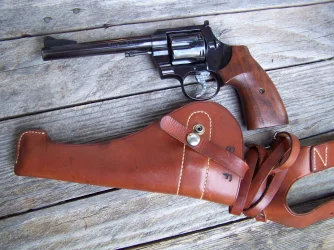
Do you carry your carbon steel handgun in the rain ?

All steel is porous even when polished. The number one way to stop metal from rusting is to polish it. When you apply a coating of oil, it gets into whatever areas that will accept it. That is why a firearm can get wet and not rust, it is polished and has its surface full of retained oil. You don't want a firearm spotless, you want it wiped down with an oily cloth now and then so the pores of the metal receive their oil.
A way to rust a firearm is to put it away clean and leave it there. Especially in a high humid area.....like VN. Over there everything rotted, even our skin, because it was always moist and hot. Our weapons no because we oiled them. I don't own any stainless guns because it was always too soft, now it isn't (So it can be machined) but I still don't like or want one. Try and buy a good French Chopping knife or any kitchen knife today. Stainless will not hold an edge at all, it is hard to get it sharp and it never lasts, where you can take a carbon steel knife out side scrape it across the cement curb a few times and get a good sharp edge that stays sharp. The new ones look great but are too soft to use much. Today carbon steel cutlery 50 years old is still valuable.
 
If I had a penny every time someone told me that their blued guns never rust I would be a millionaire. When I inspected their guns and pointed out the rust and even pitting the look on their faces was priceless.

I have actually watched rust form instantly on unprotected blued guns on humid days when they "were not rained on" and ditto when they were rained on.

Oil helps prevent rust but oil soon is wiped off or evaporates off and the rust sets in very fast.

Grease if applied when the gun is not damp will prevent rust but is a real pain in the butt when you have to carry the gun.

l have had ZERO luck when only applying wax to blued guns. I live in a humid State and wax was a colossal failure. It too, like oil, can get wiped off very easily.

And beware of just using any oil on blued guns. The absolute and most worthless oil for preventing rust is motor oil. I once had over 50 bullet molds all rust in only a few weeks when soaked in motor oil. Why???? Motor oil does not let moisture rise to the surface as it traps the moisture against the metal rusting it. So do some so called gun oils. Not all gun oils are equal. In fact some gun oils are worthless for preventing rust. A buddy of mine used Rem-oil and his guns all rusted.

Never apply any rust protecting application when the metal is not dry and also at room temperature. Many people bring a blued gun in out of freezing temperature or wet weather and then apply an oil or grease or wax which can trap the moisture underneath it. Rather you should hit the gun with a moisture displacing oil like WD 40 and when the gun warms up to room temperature wipe off the excess WD40 and apply a good gun oil or grease or combination of the two. After using WD40 and later wiping it off I use Breakfree CLP wiping off the excess followed up by Rig gun grease.

Stainless will also rust and even pit when severely neglected.

And note that chrome plating no matter what fancy name they give it will only adhere to the outside surfaces of the gun not the inside. This info came right from a professional man who does outside contract work for Mossberg, not some fly by night Jethro that does this part time in his basement. I was talked into getting the Nickle plated finish by the Professional to have him use the electrolysis Nickle which adheres to the inside of the surfaces as well as the outside. By the way this man also does chrome plate guns as well. Chrome is way harder and more scratch resistant and wears longer than the softer nickel plating which proves everything you do has a double edge sword to it.

When doing your research you will find that in the last 30 years or so there are now many newer exotic finishes which are quite rust resistant (and uglier than a 300lb fat woman) that are now applied to factory guns but the down side is once they are worn away or scratched there is nothing you can do to fix the damage. Its a trip back to the manufacturer to get the entire gun refinished, if they are even willing to do that for you. And the big expense is so high that you often are better off simply trading off your gun and buying another new one. As a matter of fact the last time I checked even getting a gun re-blued can run $300 and up which in many cases is almost as much as the gun is worth in its used condition. Do it yourself spray on glorified paint (Cerakote) may be the best option if you do not care what the gun will look like.
 
All steel is porous even when polished. The number one way to stop metal from rusting is to polish it. When you apply a coating of oil, it gets into whatever areas that will accept it. That is why a firearm can get wet and not rust, it is polished and has its surface full of retained oil. You don't want a firearm spotless, you want it wiped down with an oily cloth now and then so the pores of the metal receive their oil.
A way to rust a firearm is to put it away clean and leave it there. Especially in a high humid area.....like VN. Over there everything rotted, even our skin, because it was always moist and hot. Our weapons no because we oiled them. I don't own any stainless guns because it was always too soft, now it isn't (So it can be machined) but I still don't like or want one. Try and buy a good French Chopping knife or any kitchen knife today. Stainless will not hold an edge at all, it is hard to get it sharp and it never lasts, where you can take a carbon steel knife out side scrape it across the cement curb a few times and get a good sharp edge that stays sharp. The new ones look great but are too soft to use much. Today carbon steel cutlery 50 years old is still valuable.
Sorry but you are repeating the same old myths about carbon and stainless knives. There are quite a few types of stainless steels and carbon steels out there, in fact pages of them. I hate carbon steel knives with a passion and have gotten high quality made stainless knives every bit as sharp if you do the job right and take the time to do it right. I have had some carbon steel knives that would not hold a good edge no matter how you sharpened them and they were way less sharp than some stainless knives I have owned and still own.

I have two stainless steel Chef's knives right now I purchased 5 years ago. One is by Cutco an old time American Manufacturer and another a Japanese Damascus stainless Chefs knife. Neither has been re-sharpened and both are almost as sharp as the day they were made and they are extremely sharp.

I have a 1920's carbon steel Simco Chefs knife sold by Simson's Hardware and the knife is vastly "inferior" to my two high end modern Stainless Chef's knives.

I have another stainless Chef's knife made by a German manufacturer that is only slightly better than the inferior carbon steel Simco knife but way inferior to the stainless Cutco and Japanese Damascus knives.

The point being made is that you cannot make generalizations about all the knife steels used in the past or in the present. There can be outstanding carbon steel knives and outstanding stainless knives, it all depends who made them and what type of steel is in them and what kind of heat treatment they used. You can find junk knives made in both carbon and stainless steel.

One of the most popular knives made is the iconic Buck 110 Kinfe made in stainless but the stainless is 4440 one of the most common and most cheapest of the stainless steels so how can Buck Knives be so good? Simple, they use a superior heat treatment that in comparison to some other manufactures using the same exact steel do not use the superior heat treatment resulting in an inferior product.

Carbon steel kinves when they oxidize only slightly lose their sharpness and considering all the rust headaches you have to put up with when using carbon steel knives they are all persona non-grata in my house or kithcen.

The "original" Gerber company of "yet the year" back when they made quality knives and not their present day junk had the best idea as they used a super hard carbon steel blade that was hard chrome plated to cut down on the rust.
 
Sorry but you are repeating the same old myths about carbon and stainless knives. There are quite a few types of stainless steels and carbon steels out there, in fact pages of them. I hate carbon steel knives with a passion and have gotten high quality made stainless knives every bit as sharp if you do the job right and take the time to do it right. I have had some carbon steel knives that would not hold a good edge no matter how you sharpened them and they were way less sharp than some stainless knives I have owned and still own.

I have two stainless steel Chef's knives right now I purchased 5 years ago. One is by Cutco an old time American Manufacturer and another a Japanese Damascus stainless Chefs knife. Neither has been re-sharpened and both are almost as sharp as the day they were made and they are extremely sharp.

I have a 1920's carbon steel Simco Chefs knife sold by Simson's Hardware and the knife is vastly "inferior" to my two high end modern Stainless Chef's knives.

I have another stainless Chef's knife made by a German manufacturer that is only slightly better than the inferior carbon steel Simco knife but way inferior to the stainless Cutco and Japanese Damascus knives.

The point being made is that you cannot make generalizations about all the knife steels used in the past or in the present. There can be outstanding carbon steel knives and outstanding stainless knives, it all depends who made them and what type of steel is in them and what kind of heat treatment they used. You can find junk knives made in both carbon and stainless steel.

One of the most popular knives made is the iconic Buck 110 Kinfe made in stainless but the stainless is 4440 one of the most common and most cheapest of the stainless steels so how can Buck Knives be so good? Simple, they use a superior heat treatment that in comparison to some other manufactures using the same exact steel do not use the superior heat treatment resulting in an inferior product.

Carbon steel kinves when they oxidize only slightly lose their sharpness and considering all the rust headaches you have to put up with when using carbon steel knives they are all persona non-grata in my house or kithcen.

The "original" Gerber company of "yet the year" back when they made quality knives and not their present day junk had the best idea as they used a super hard carbon steel blade that was hard chrome plated to cut down on the rust.
I have to disagree with you. I only worked as a cook in the most successful restaurant in Northern Calif for four years when I was in school but during that time I learned a lot about quality knives, how use them and to keep them. A carbon steel knife will never rust while being used because it is always in oil of one type or another, same with spatulas. I have high quality French made carbon steel knives in my kitchen the size of swords down to 10" blades. Some are 60+ years old and haven't been used for a decade yet they are not rusted. Discolored and ugly by your standards but not rusty. They can be honed with a stone and freshened with the steel and never need mechanical sharpening. There's a guy in the Bay Area "Mack the Knife" who makes a fortune from his parked truck when people show up with a handful of stainless knives for him to mechanically make sharp again. Too soft to hold an edge very long and hitting with a steel doesn't help either. Quality is difficult to measure by cost anymore as all knives are ridiculously expensive. An average stainless steel knife say10-12" is $120-150 each. The best Japanese and German sets $6-800 There are no companies making carbon steel knives anymore so it is a moot point anyway. People want knives to be nice looking and shiny as they take them to Mack.
 
If it's raining and I have to go out, my carry gun goes with me. It's always covered by some garment or other though.

However, back in the day, when I still hunted, rain, snow, whatever, the gun went along. I've always hated oil on the exterior of my guns, so I used Pledge furniture polish. Later on, I switched to Ren Wax, which I still use, but to tell you the truth, the Pledge probably did just as good a job. Ren Wax probably holds up better, but I couldn't swear to it.

Either way, I've never seen rust on any of my guns.
 
Yep!

As a matter of fact my most expensive hunting tool is bead blasted and blued carbon. It’s also my most frequently used hunting tool and despite having the most rust-prone finish possible and often (couple dozen days a year) hunting the rain and living in a humid state (AR) it remains rust free.

My habits include:
  • Renaissance wax twice a year whether it needs it or not and after heavy handling/cleaning or being rained on
  • Basic maintenance as needed
  • Use it often and enjoy it in the field
 
Last edited:
Just thinking about the weapons I carried during monsoon season in Vietnam. Carbon steel, sure. Stainless existed but was just starting to be adapted to firearms. My Remington-Rand M1911A-1 .45 pistol was manufactured before the end of World War II, I don't think stainless steel alloys had even been thought of yet…
FWIW, Ford Motor Company made a few stainless steel cars in the 1930’s.

When I was still on the job I’d oil my service revolver (or pistol) after I returned home if it rained. Only took a few minutes.
 
I have seen rust on stainless guns and hard chromed guns as well - they are harder to rust but not impossible.

Synthetic oil does not evaporate (it does get rubbed off).

Nothing that shoots is maintenance free! Unless, of course, you dont shoot it - even then you had best have a climate controlled environment!

Riposte
 
FWIW, Ford Motor Company made a few stainless steel cars in the 1930’s.

When I was still on the job I’d oil my service revolver (or pistol) after I returned home if it rained. Only took a few minutes.
As I recall, what we call stainless steel in North America was developed in Germany prior to WW2, where it is known as "rost frei" (rust free). Dozens of alloys are used for different applications, all consisting primarily of iron which is a ferrous metal subject to oxidation.
 
An observation, not a recommendation:
I watched a show about living in Alaska. In the freezing cold months, the hunter left his rifle outside the whole time because bringing it inside caused condensation to form inside the rifle, leading to internal rusted parts.
 
I have a fair number of Blue and Stainless Revolvers.
I usually only carry Stainless, wet or dry.
No reason to subject the Blue Guns to Holster wear when I don’t need to!
 
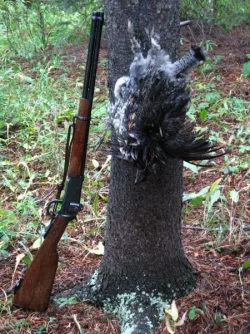
I carry blued guns in all conditions, pistols and rifles. I have several pistols with a lot of blue wear, from lots of carry in cheap holsters and riding motorcycles etc, and the abrasive quality of the dust that permeates everything in the west. None show rust other than a few small spots from the late 80s or early 90s. I somewhat prefer to take the old winchester 94 made in 1927 when it raining or snowing, as much of its finish is worn way, though I really havent had much trouble with others that have better finish and get rained and snowed on. I dont know if its the generally drier clinite of the Rockies and N Az where Ive spent the most time, but I cant even recall the last time I wiped a gun down with oil other than dads stuff in the midwest after he passed.

I got the 1886 Browning carbine out after hearing they had taken 2 bear traps to set up near me. I always carry something on dog walks and dusk skunk patrol, most often the past few years its been a 357 carbine (1873). 2 nights ago I laid the 86 carbine on the cargo box on the back of one of my vehicles while I did some work on another. Finished the work, sat on the porch a while with the dog before our dusk walk, it rained about 20 minutes during that time. So I reached back for the 86 that I thought was leaning against the door frame, and it wasnt there.... realized Id left it on the cargo box and was rained on. I wiped it off with a terry cloth dish rag, went for the walk, didnt think any more about it until this thread. Just checked it, its fine, even the places where the blue is thin from carrying it.

Hunting in the rain with one of my better condition 94s. The stock gets funny colored in the rain, I wipe it off and not long after it looks fine. I cant recall when it was last oiled on the outside. I try to check the bore every year or two and run a couple patches and brush through it, just in case.

94 and grouse in rain.webp
 
Last edited:
I have to disagree with you. I only worked as a cook in the most successful restaurant in Northern Calif for four years when I was in school but during that time I learned a lot about quality knives, how use them and to keep them. A carbon steel knife will never rust while being used because it is always in oil of one type or another, same with spatulas. I have high quality French made carbon steel knives in my kitchen the size of swords down to 10" blades. Some are 60+ years old and haven't been used for a decade yet they are not rusted. Discolored and ugly by your standards but not rusty. They can be honed with a stone and freshened with the steel and never need mechanical sharpening. There's a guy in the Bay Area "Mack the Knife" who makes a fortune from his parked truck when people show up with a handful of stainless knives for him to mechanically make sharp again. Too soft to hold an edge very long and hitting with a steel doesn't help either. Quality is difficult to measure by cost anymore as all knives are ridiculously expensive. An average stainless steel knife say10-12" is $120-150 each. The best Japanese and German sets $6-800 There are no companies making carbon steel knives anymore so it is a moot point anyway. People want knives to be nice looking and shiny as they take them to Mack.
quote----------------There are no companies making carbon steel knives anymore so it is a moot point anyway.----------quote

A quick 5 second google search produced this and yes they are "kitchen knives" and all are made of carbon steel.

https://cutleryandmore.com/collections/carbon-steel-knives

Here is just one of many carbon steel blades using modern steel and are Chef's knives.

What are the disadvantages of using 52100 steel?​

This steel sounds almost perfect for tough applications. But using it without knowing where it falls short can lead to unexpected failures, like a rusty part, long after it's been installed.

The biggest disadvantage of 52100 steel is its poor corrosion resistance; it will rust very easily if it is not protected with oil or a coating. It is also not a good choice for welding and can be brittle if the heat treatment process is not done perfectly.
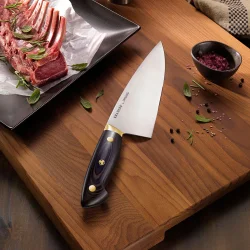
In Europe today the top Chef's still use and buy carbon steel knives. And here in the U.S. my above post gives just one source of many for carbon steel kitchen knives.
1782509821960.webp

As far as utility and survival and hunting knives there are more choices for carbon steel than grains of sand on the beach. And I might add if you are dumb enough you can still get carbon steel pocket knives such as those made by Case, Opinel, Uncle Henry, Smith & Wesson and Great Northern etc. etc. Guaranteed to rust shut so you can never open the blades. Not to mention the currently made WWII K-bar replica a straight knife. Ontario Knives and a host of others survival and camping knives can be had in carbon steel.

https://weapongenetics.com/best-carbon-steel-pocket-knife/

As a matter of fact one of my favorite knives is a Gerber hard chrome plated carbon steel knife, the model 400 which is no longer made. It was actually a cross between an all purpose kitchen knife and also a hunting knife and that series was wildly popular when it was made back in the 1980's. The blade is a flat grind and not very thick like a true hunting knife which usually have 1/4 inch thick blades. Although the blade is hard chromed the "edge" of the blade has no chrome on it and it does indeed rust even when well cared for especially if it is allowed to stay wet or have food on it for too long a time.

I have had both carbon and stainless knives that were either easy to sharpen or a real bear to try and sharpen. Again it all depends who made the knife, if it was quality, what steel was used in it and what type of heat treatment was used on it.

And by the way that blue black color you talked about "is" indeed corrosion, its the beginning of corrosion which of course will only get worse. My American made 1920's Simco will turn blue back with only one cut into an acidic vegetable or bloody meat and yes it eventually did rust and did pit and I mean big time. It was used by my Aunt in the 1920's and naturally she made no special pains to prevent rust. I cleaned it up big time with a total re-grind and had the blade looking like a mirror probably way better than when it was new and the first damn time I cut into an onion it went blue black and after all that hard work.
 
Why God gave us shoulder holsters to wear under the coat.View attachment 889427

Thanks for the picture its a great old fashioned high quality Colt now extinct as the Dinosaurs because its no longer made, unfortunately. Looks like a custom gun with the jeweled trigger and hammer. Probably ever bit as quality as the "original" Python.
 
As I recall, what we call stainless steel in North America was developed in Germany prior to WW2, where it is known as "rost frei" (rust free). Dozens of alloys are used for different applications, all consisting primarily of iron which is a ferrous metal subject to oxidation.

And the gas cylinders of M1 Garand rifles were made with stainless steel. They have a black coating just to match the finish of the rest of the rifle. That coating was prone to early deterioration and would often be the first part of the rifle showing metal finish wear.
 
I carried my Combat Commander on many ATV rides in the rain. All day long. You get pretty wet by the end of the day, rain poncho or not.

Same for the Ithaca M37 12 ga. my dad bought for me when I was 12. It spent many a day out hunting in the rain/snow.

We'd come home, unload the gun. Set it by the stove to warm up/dry off and then field strip it, clean it, wipe it down with an oily cloth (3n1 oil back in those days) and put it away for the next use.

The Ithaca never rusted. I carried the 1911 as a duty gun for a couple years in the early 80's. Carried it in a high rise forward cant holster in the heat/humidity down along the Kanawha River in a small town west of Charleston, WV. I did, sadly, find some rust on the right side of the grip frame under the grip panel once. Just never thought about the regular wipe downs/cleanings not keeping the sweat off my right arm out from under the right grip panel. After that I did remove the grips on a regular basis and wipe the frame with my oily cloth. Never rusted further.

Just oiling a gun isn't enough. You've got to do it often enough and do it right.

I've oiled up/wiped down rifles/shotguns, put them in their cases and stored them in the attic for as long as 8 years before pulling them down for inspection/wipe down again. No rust. Do it right.

Having said all that, I do have, somewhere, an old Schrade skinning knife that rusted in spite of everything I did to keep it from rusting. I'd come home every day from deer hunting, pull it out of the scabbard and wipe it down with the same oily rag I used on the guns. Before the first week of deer season was over it was rusted like crazy. I put it in a box and got a stainless steel Schrade that never rusted on me.
 
I remember while in the Border Patrol some of us while shinning our boots would give the blue revolvers a coat of the same black shoe polish.
 
As I recall, what we call stainless steel in North America was developed in Germany prior to WW2, where it is known as "rost frei" (rust free). Dozens of alloys are used for different applications, all consisting primarily of iron which is a ferrous metal subject to oxidation.
I have a Winchester Model 54 made in 1927 - the barrel is marked "Stainless Steel".

The stuff has been around quite a while!

Riposte
 
AI Overview


Unraveling the Mysterious History of Stainless Steel – IMC/TEDDY
Stainless steel was invented in 1913 by English metallurgist Harry Brearley in Sheffield, UK. He discovered the corrosion-resistant alloy—initially called "rustless steel"—while experimenting with chromium additions to solve erosion problems in military gun barrels. [1, 2, 3]
While other scientists had previously explored chromium alloys, Brearley is credited with the invention because he recognized the metal's practical value and championed its commercial use, particularly for cutlery. [1]
Following Brearley's initial discovery, the development of stainless steel evolved through several other key contributors:
  • Benno Strauss and Eduard Maurer: Krupp engineers who patented austenitic stainless steel (the 18/8 alloy) in Germany in 1912.
    • Elwood Haynes: An American inventor who obtained a patent for martensitic stainless steel in 1919.
    • William J. Kroll: Discovered precipitation-hardening stainless steel in 1929.
 
Yes I do. It is my daily "unseen" (I confused someone with 'discrete') sidearm and under a jacket or some such clothing. I do look at it when day is done.

It was worn and semi exposed - bluing worn - when I started. Still works good and connects farther than I plan on shooting it.
 

Latest posts

Back
Top