
You are using an out of date browser. It may not display this or other websites correctly.
You should upgrade or use an alternative browser.
You should upgrade or use an alternative browser.
.44 russian ???????
- Thread starter RAY87
- Start date


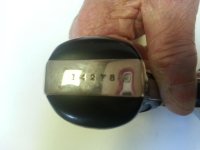
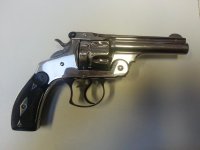
Your .44 Russian looks to have a lot better finish than mine. Mine is excellent mechanically. I was told half a dozen years ago at a gun show it was worth about $700. The two I saw at the show (which made me ask) were priced higher than that...
That are not that popular yet because they are double action and can't be used in Cowboy shooting...but there are only so many of them out there. I've had mine since 1972...paid $75 for it then....
You might try looking at some of the gun auction sites to get a current value or a S&W collector. I have a factory letter on mine dated about 1975....
wileyjackhammer
That are not that popular yet because they are double action and can't be used in Cowboy shooting...but there are only so many of them out there. I've had mine since 1972...paid $75 for it then....
You might try looking at some of the gun auction sites to get a current value or a S&W collector. I have a factory letter on mine dated about 1975....
wileyjackhammer
alaskavett
US Veteran
Wow! That is just amazing! It is also beyond my scope and area of expertise (then again what isin't ) Not sure of value but if the finish is original and it looks like it is, then you have a gem and I will be more then willing to go beyond the $75 mentioned above... Kyle
smokey04
Member
After you pay for the re-fin the gun will be worth about 1/2 as much as it was before the re-fin.It's the death knell for collectors but,if it is to be a shooter ,well it's yours and you should do what makes you happy.It looks too good[to me] to re-fin but then, I'm a traditionalist. Good luck in your decision. Nick

A clear photo of the left side and a description of the bore/chamber condition would help with a value determination, but if it has its original finish it would be unwise to refinish it.

Your 44 Double Action looks to be in 44 Russian caliber, since I think it has the short cylinder (1 7/16"). It would have shipped from the factory around 1885. As for the finish, it would take a hands on inspection to be sure, but the serial number seems to be slightly dished at the edges which would indicate a possible refinish.
Values are on the rise for this model and if in original finish, you would be looking at something over $2000, and if refinished, maybe $1000-$1200.
Values are on the rise for this model and if in original finish, you would be looking at something over $2000, and if refinished, maybe $1000-$1200.
Masterpiece
Member
RAY87,If refinished, maybe $1000-$1200.
Given what I see in your photos...Along with the *Star* stamped alongside the Serial No. on the Butt, I believe your Revolver has already been refinished...Possibly by the Factory given the quality of the work & the Rework Star!!
Given the above...I'd have to go along with Gary (glowe) that it's value is somewhere in the $1000-$1500 Range depending on how much interest it would generate at any given time!!
You might want to remove the Grips & check on the Left Side Grip Frame to see if it's dated as to when it was returned to the Factory...An example would be a number stamped there something like this (5.38) Etc.!!
Given what I see in your photos...Along with the *Star* stamped alongside the Serial No. on the Butt, I believe your Revolver has already been refinished...Possibly by the Factory given the quality of the work & the Rework Star!!
Masterpiece - good eye. I did not look close enough to see the star and thought it was a light reflection. Probably refinished when returned to the factory, but could have been mechanical repairs as well. It is my understanding that almost all guns returned to the factory early in the twentieth century would get a complementary refinish along with any repairs of part replacements. I think factory refinished guns normally rate higher than those finished on the outside.
Jim Watson
Member
- Joined
- Jun 14, 2001
- Messages
- 2,882
- Reaction score
- 2,157
- City & State/Province
- Florence, Alabama, USA
Why would you refinish? It looks fine, factory renickle and all.
Masterpiece
Member
Gary,I did not look close enough to see the star and thought it was a light reflection.
I think factory refinished guns normally rate higher than those finished on the outside.
Thought I caught it in his photos...But truth be told...I had to move it over to my Photo Files just to make sure because my eyes aren't what they used to be...Ha!!~Ha!!!!
As far as Factory Refinishes...Especially refinish work done on the Early Revolvers...I also believe the value lost is much less!!
Sorry about the pic. Yes theres a star on the sn witch made me belive it had to be refinished, it wasnt that I wanted to refinish it. I thought it looked to good to be original .thanks for all the info .is this gun worth shooting or sit on the shelf and can u find .44 ammo
Several companies manufacture 44 Russian ammo. I have bought from Black Hills and they load quality stuff. Mostly I reloaded my own and found several smokeless light loads that worked out great. Lot easier cleanup as well.
If done at a range and thouroughly cleaned after each session, I see no harm in shooting. It needs to be understood, however, that parts are hard to come by and they can certainly break after 130 years of service.
If done at a range and thouroughly cleaned after each session, I see no harm in shooting. It needs to be understood, however, that parts are hard to come by and they can certainly break after 130 years of service.
The gun can certainly be shot if it is tight. .44 Russian is hard to find and expensive, but you can trim .44 Special cases down to .970 in length and use a black powder substitute for mild target loads.
Several companies manufacture 44 Russian ammo. I have bought from Black Hills and they load quality stuff. Mostly I reloaded my own and found several smokeless light loads that worked out great. Lot easier cleanup as well.
If done at a range and thouroughly cleaned after each session, I see no harm in shooting. It needs to be understood, however, that parts are hard to come by and they can certainly break after 130 years of service.
NO!!!! Only with blackpowder ammo!!! No exceptions!! Unless you want it to grenade. NEVER shoot smokeless in these old BP guns. Totally different pressure curve no matter how light the load.
Driftwood Johnson
Member
Howdy
I am afraid I have to agree with Boge on this one. I do not shoot Smokeless loads in any of my Top Breaks, no matter how light the load. Modern Smokeless powders have a completely different pressure curve than Black Powder, it is not just a matter of peak pressure. If you don't want to mess with specially lubed bullets for Black Powder, you can use American Pioneer Powder.
You do not have to cut down 44 Special brass, new 44 Russian brass is available from Starline. Midway USA shows it being in stock, I would grab some right away, it usually does not stay in stock long.
I am afraid I have to agree with Boge on this one. I do not shoot Smokeless loads in any of my Top Breaks, no matter how light the load. Modern Smokeless powders have a completely different pressure curve than Black Powder, it is not just a matter of peak pressure. If you don't want to mess with specially lubed bullets for Black Powder, you can use American Pioneer Powder.
You do not have to cut down 44 Special brass, new 44 Russian brass is available from Starline. Midway USA shows it being in stock, I would grab some right away, it usually does not stay in stock long.
NO!!!! Only with blackpowder ammo!!! No exceptions!! Unless you want it to grenade. NEVER shoot smokeless in these old BP guns. Totally different pressure curve no matter how light the load.
No they don't! Take the fastest shotgun powders and you can produce identical pressure curves. Show me the facts to the contrary! I can guarentee you that I can load a lighter, lower pressure smokeless than BP and as I can determine, the cowboy commercial ammo is also lighter than BP. So many people make these statements, but none have any concrete evidence other than rumor. Sure guns can come apart, but I bet through the years, more have failed using BP from excessive wear, plugged barrels, etc. than solely with the use of smokeless powders.
I can show actual smokeless powder pressure curves in longer barreled guns that are identical to BP and challange anyone to come up with documented facts to the contrary.
Personally, I think it is unwise to shoot these old guns with any types of powder more than a couple times a year. They can break and parts are very difficult if not impossible to locate. A broken gun can cost big bucks to repair, plus it can ruin almost all the collector value. Better to get a reproduction.
Last edited:
Driftwood Johnson
Member
Gary
We have had this argument before. I will go on Dave Chicoine's advice to never shoot Smokeless loads in the old guns. He has seen and repaired more of these guns than anybody.
Would love to see your pressure data, not just max pressure reached but a plot of the pressure curve.
Replicas are great, but nobody is making a replica of the DA44.
We have had this argument before. I will go on Dave Chicoine's advice to never shoot Smokeless loads in the old guns. He has seen and repaired more of these guns than anybody.
Would love to see your pressure data, not just max pressure reached but a plot of the pressure curve.
Replicas are great, but nobody is making a replica of the DA44.
Last edited:
Would love to see your pressure data, not just max pressure reached but a plot of the pressure curve.
Replicas are great, but nobody is making a replica of the DA44.
I have seen several articles defending the use of smokeless powders in BP guns, but the best study still remains the Sherman Bell study published in Double Gun Journal a few years ago.
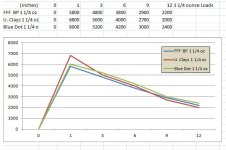
Using state-of-the-art pressure transducers and data collection, pressures (not brisance) were collected at various locations in a shotgun barrel for equivalent loads of smokeless and black powder loads.
The results indicated that you can develop equivalent loads the pressure vs. time(locations) values was within plus/minus about 100-psig, i.e. identical. In my opinion the smokeless vs. blackpowder arguement doesn't hold water any more.
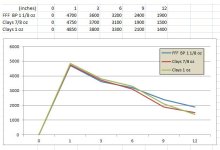
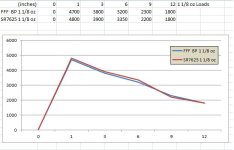
Bell tested shotgun pressure curves with pressure transducers placed from 1" to 12" along the barrel of his test guns. The tests were conducted with several different powders against FFFg and all pressure curves were almost identical when compared to BP. Does a revolver barrel act differently than a shotgun barrel? Sure, but I don't think comparative burn rates of powders would change in different types of gun barrels. Besides, the tests compare BP to smokeless powders shot in the same gun barrel and it should be the comparative data not the gun that is of interest, plus it should be scalable.
The attached data comes from Sherman's work and certainly gave me a lot of confidence in my personal conclusions. I am confident that the skeptics will never be satisfied, but I can not find any data that supports thier positions and the pressure curve difference and even if it happens, so what? Peak pressures at 1" or 2" down the barrel should not make any difference in performance of the barrel.
All of us should be quite aware of felt recoil when shooting revolvers and the ability to sense hot loads is quite easy when one is used to a shooting a particular revolver. I can tell you that it is very easy to develop loads of fast butning smokless powders that have a large reduction in felt recoil as compared to BP. Also, the use of your chronograph adds to the confidence that you are not over-stressing the old gun. Less felt recoil, plus slower velocities should make it very difficult to blow up a gun that can easily handle full power BP loads.
Forgot one of your points - you're right about the repro 44 DA, but I was thinking about the S&W Heritage and Italian Russians and Schofields available out there. I shoot my Schofield often, but get out one of my Americans maybe once a year and do shoot them with reduced load BP. I use BP mostly for the ambiance and occasional comments from the other shooters . . . and yes hate tht clean-up!
Attachments
Last edited:

Not trying to throw any powder (black or smokeless) on the fire, but what I would be interested in on a revolver would be a pressure curve, based on time, in the chamber.
(Not distance down the barrel.)
In other words, what is the peak pressure in the chamber and how long did it take to get there.....
Knowing that BP is considered an explosive and smokeless is considered a combustible,I would think that the BP would peak quite high at the beginning and the smokeless would take a little longer to build up.(And be somewhat vented by the cylinder/barrel gap.)
(Not distance down the barrel.)
In other words, what is the peak pressure in the chamber and how long did it take to get there.....
Knowing that BP is considered an explosive and smokeless is considered a combustible,I would think that the BP would peak quite high at the beginning and the smokeless would take a little longer to build up.(And be somewhat vented by the cylinder/barrel gap.)
Is Sherman Bell a bonafide ballistician, i.e., credentials, Ph.D., etc.? I honestly don't know. I do however know that REAL ballisticians at ATK (parent co. of Federal & Speer) put out this memo on Blue Dot (the powder Bell used):
Alliant Powder's Blue Dot should not be used in the .357 Magnum load when using 125-grain bullets nor should not be used with any loadings in the .41 Magnum cartridge. Hmmmm. And you think someone should use this powder in an 140 yr. old revolver? No thanks.

Alliant Powder's Blue Dot should not be used in the .357 Magnum load when using 125-grain bullets nor should not be used with any loadings in the .41 Magnum cartridge. Hmmmm. And you think someone should use this powder in an 140 yr. old revolver? No thanks.

Jim Watson
Member
- Joined
- Jun 14, 2001
- Messages
- 2,882
- Reaction score
- 2,157
- City & State/Province
- Florence, Alabama, USA
I reacted to recommendations by Driftwood and David C. by selling my topbreaks to collectors. I was not involved enough to load black for them.
But I also read here of people saying they shoot smokeless in topbreaks routinely. One poster even rechambered his .44 Russian to .44 Special for convenience in brass and loading.
A guy here once did the equivalent of the Bell study, using some old NRA pressure curves. He routinely shot trap with a Damascus barreled shotgun.
Revolvers are different. Speer once made a single shot "cylinder" with pressure transducer for a .357 Magnum to study the effect of cylinder throat and gap on pressures. They got some interesting results that were not seen with the usual Universal Receiver test barrel, not even the "vented" one devised to simulate a revolver.
It would be nice if somebody would replicate their work with black powder.
Also with fakes. I do not assume that imitation gunpowder performs like real black other than peak pressure.
But I also read here of people saying they shoot smokeless in topbreaks routinely. One poster even rechambered his .44 Russian to .44 Special for convenience in brass and loading.
A guy here once did the equivalent of the Bell study, using some old NRA pressure curves. He routinely shot trap with a Damascus barreled shotgun.
Revolvers are different. Speer once made a single shot "cylinder" with pressure transducer for a .357 Magnum to study the effect of cylinder throat and gap on pressures. They got some interesting results that were not seen with the usual Universal Receiver test barrel, not even the "vented" one devised to simulate a revolver.
It would be nice if somebody would replicate their work with black powder.
Also with fakes. I do not assume that imitation gunpowder performs like real black other than peak pressure.
Is Sherman Bell a bonafide ballistician, i.e., credentials, Ph.D., etc.? I honestly don't know. I do however know that REAL ballisticians at ATK (parent co. of Federal & Speer) put out this memo on Blue Dot (the powder Bell used):
Alliant Powder's Blue Dot should not be used in the .357 Magnum load when using 125-grain bullets nor should not be used with any loadings in the .41 Magnum cartridge. Hmmmm. And you think someone should use this powder in an 140 yr. old revolver? No thanks.
This is not proof of anything. I did state that you can get similar pressure curves using fast burning shotgun powder and anyone who knows Blue Dot knows it is a slower burning powder made for magnum shotshell loading. Bell was just using Blue Dot as an extreme example, yet still getting acceptable pressure curves.
This old wives tale goes back over 100 years when it was written often that smokeless powders were blowing up guns. Now the question is why did this happen? Most likely in the early years of reloading smokeless, many people would load the same as with BP, just fill up the case with powder and stick a bullet on top. In essense, overloading by a large order of magnitude.
As I said before, I will never change the mind of the skeptics, but why do they not, at least, have the factual data to support their positions?
Gary,
Just a thought.... If smokeless is safe in a BP gun, why did the arms manufacturers bother to up their metallurgy to handle smokeless?


Just a thought.... If smokeless is safe in a BP gun, why did the arms manufacturers bother to up their metallurgy to handle smokeless?

IIRC, there is posted in the forum a letter or catalog page from S&W around 1909 that states commercially manufactured smokeless ammo is safe in S&W handguns. I thought I had a copy of it, but can't locate it ATM. But, don't you think this makes sense? Why would commercial ammo manufacturers who wanted to sell a product into a market that was dominated by older BP guns not make the ammo compatible with the older guns? Otherwise they would essentially only sell smokeless cartridges to the new hand ejectors which were designed for the new .38 Special and .44 Special cartridges. That was a very narrow market at the time.
Gary,
Just a thought.... If smokeless is safe in a BP gun, why did the arms manufacturers bother to up their metallurgy to handle smokeless?
Speed and ballistic improvements. Back in the BP era, most all guns were pretty much built with the same ballistics in mind. Almost all revolvers shot 600-700 fps and no one demanded any more. About the only work done on hi-power BP shooting was done with rifles and a good example would be Sharps. Originally, 45-70 was enough, but demand grew for more power and speed, so 45-90s and 45-120s were designed with heavier barrels to satisfy the demands of the buffalo hunters.
Today we want 357 and 44 magnums, not to mention 500s. Shooters want over 1000 fps out of their revolvers and pistols today, so pressures went way up. Design changes, new powders, and better materials have evolved into some pretty impressive weapons today.
Now the question is whether powders were developed to take advantage of improved metallurgy or was improved metallurgy a result of smokeless powders? My answer would be a little bit of both. Remember that hardly and firearms changed with the advent of smokeless powder and most manufactures had statements that it was perfectly safe to use smokeless powders in their guns. Most S&W top-breaks continued well into the twentieth century with the same design as their BP predecessors. Metals were continuously improving and I think the gun companies obviously saw the value in using that new technology to make more powerful guns for the consumer. Of course as soon as stronger guns were available, powder companies developed higher pressure powders - a never ending spiral.
Last edited:
clang444
US Veteran
I used to get the Double Gun Journal and the "Finding out for Myself" articles were the best in the magazine. I still have the magazine somewhere that has the black powder vs. smokeless pressure testing mentioned above. If I remember correctly, the author also tested some old barrels out to failure to compare Damascus to similar era steel ones. The Damascus barrels actually survived higher over-pressure loads than did the steel ones - talk about eye opening.
I am fortunate enough to have several old S&W catalog reproductions. The oldest one does not have any hand ejectors in it, so it is pre-1896:

This one makes no mention of smokeless powder.
My next oldest catalog is either 1899 or 1900, it has the 1899 hand ejector in it:

Here is what is says about smokeless powder:


I also have the catalogs from 1901 and 1903:

From the 1901 catalog:

and from the 1903 catalog:

From reading these catalogs, the issue appears to be too many new fangled smokeless powders and people not knowing how to use them properly.
I am fortunate enough to have several old S&W catalog reproductions. The oldest one does not have any hand ejectors in it, so it is pre-1896:

This one makes no mention of smokeless powder.
My next oldest catalog is either 1899 or 1900, it has the 1899 hand ejector in it:

Here is what is says about smokeless powder:


I also have the catalogs from 1901 and 1903:

From the 1901 catalog:

and from the 1903 catalog:

From reading these catalogs, the issue appears to be too many new fangled smokeless powders and people not knowing how to use them properly.
rhmc24
Absent Comrade
In 1909 S&W says their guns are warranted for use with smokeless
powder ammo that is factory loaded. 'Factory loaded' probably due
DIY reloaders might load smokeless by volume a la black powder.

See last paragraph ---

powder ammo that is factory loaded. 'Factory loaded' probably due
DIY reloaders might load smokeless by volume a la black powder.

See last paragraph ---

Last edited:
Skeetr57
Member
Note that the .32 Long, the .38 Special and the .44 Special were all developed for loading with black powder, so you nay sayers should never load your .32 He, .38 M&P or Triple Locks with anything but black powder. In the early days of smokeless powder, two types f powder were available, bulk and dense. Bulk was designed to be loaded volume for volume with black powder. Dense was loaded in much reduced weight for the same pressure and velocity, but many old time handloaders didn't understand this, and used the same dippers they had used for black powder to measure dense smokeless, with disastrous results. In addition, early commercial smokeless powder were not as consistent from lot to lot, so equal weights or volumes didn't always result in the same pressure. Bulk smokeless went away when DuPont took it off the market 50 or so years ago, and the powder manufacturers got their act together before WWII so reloading is perfectly safe today, even for guns made back in the BP era.
I don't think that Sherman Bell has any formal training or certification as a ballistician, but so far as I know, neither does David Chicoine. Sherman Bell does work with a professional ballistician named Tom Armbrust when developing his test loads and uses proof loads provided by SAAMI to calibrate his own test equipment. As Bell has proved the danger of smokeless in Damascus is an old wives tale and so far as I am concerned, the danger of shooting smokeless loads of appropriate pressure in old S&W revolvers is another one. If someone has better information, lets hear it.
I don't think that Sherman Bell has any formal training or certification as a ballistician, but so far as I know, neither does David Chicoine. Sherman Bell does work with a professional ballistician named Tom Armbrust when developing his test loads and uses proof loads provided by SAAMI to calibrate his own test equipment. As Bell has proved the danger of smokeless in Damascus is an old wives tale and so far as I am concerned, the danger of shooting smokeless loads of appropriate pressure in old S&W revolvers is another one. If someone has better information, lets hear it.
...If someone has better information, lets hear it.
You wouldn't believe me anyway. I've shot real BP for over forty years and have seen/heard every excuse under the sun. I have seen a few '87 Win. shotguns crack using AA Trap loads. I have seen many S&W Model 3 frames stretched from smokeless. I have seen a '78 Colt cylinder blow from using Unique. The one constant that I have noticed is that smokeless shooters will do anything to justify not having to use BP. They call that sloth.
I suppose I should try to explain my philosophy of shooting old guns. (i.e. BP guns).
The only reason I can come up with for shooting them is to experience what it was like in their day. This involves using black powder. I get the full experience.. the sound, the recoil, the accuracy AND the cleaning afterwards. If I want to shoot out the center of a target there are many "modern" guns that will do this much better than the old ones. (Not that I can do it, but I stand a much better chance with one of my modern target guns.) If I want to experience what it was like for my ancestor to hunt to put meat on the table, I will dress up in buckskins and take my flintlock and go hunting. Not dress up in buckskins and take my scoped 30/06 out on my 4 wheeler.
Anybody understand my point??
The only reason I can come up with for shooting them is to experience what it was like in their day. This involves using black powder. I get the full experience.. the sound, the recoil, the accuracy AND the cleaning afterwards. If I want to shoot out the center of a target there are many "modern" guns that will do this much better than the old ones. (Not that I can do it, but I stand a much better chance with one of my modern target guns.) If I want to experience what it was like for my ancestor to hunt to put meat on the table, I will dress up in buckskins and take my flintlock and go hunting. Not dress up in buckskins and take my scoped 30/06 out on my 4 wheeler.
Anybody understand my point??
Similar threads
- Replies
- 23
- Views
- 724


- Replies
- 1
- Views
- 86


