


I recently purchased a Smith & Wesson 986.
The first time I fired it I had at least one sometimes two light strikes per cylinder. All my shooting is double action.
My initial testing of any gun is with factory ammo.
I did some research on this and other forums and found out this is a common initial problem.
The recommended solution was to check the strain screw and see if it is loose. Mine was and I tightened it a bit.
I went to the range again for testing. Better but still got light strikes, although not as many. Trigger also got heavier than I like.
At the range I tightened the strain screw a bit more and the last three cylinders were OK. I would have tested more but I ran out of factory ammo.
When I got home I started to unload the moon clips and prepare the brass for reloading.
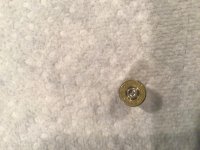
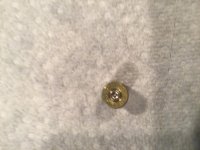
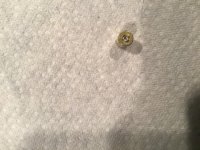
Looking at some of the primers it looks like they were hit very deep and hard.
I’ve been reloading since the late 60’s and have had many guns but never seen primers hit like this. I’m surprised they weren’t pierced. Normally there is just a small dimple in the center. That’s the way the FTFs looked but very shallow.
Apparently tightening the strain screw caused this. I didn’t notice anything odd with the primers on the first outing. But without the adjustment, I got far too many light strikes. There should be none.
I never had a problem with my 686 and never had to make an adjustment. My understanding is that the strain screw should be fully seated to avoid light strikes but I expected nothing like this. Is this normal for this gun?
I attached a few pictures of some random cases.
This is going back to Smith and Wesson unless someone can suggest a better idea. I think something else is going on with this gun beyond a loose strain screw.
I have several Smith & Wesson guns including a Model 41 that I used in Bullseye matches. Each has been of the highest quality and I never had an issue even after in some cases tens of thousands of rounds. This thing is horrible. Even the rear sight worked its way loose after a few rounds and had to be tightened. This is not the Smith & Wesson I knew and certainly something one would not expect from a $1,000 gun
How this thing got out of quality control is beyond me. They must not have fired it. What happened to American Pride and Craftsmanship? I also recently purchased a Walther PPQ Q5 and it was perfection right out of the box.
So disappointing!
Thanks in advance for your input.
The first time I fired it I had at least one sometimes two light strikes per cylinder. All my shooting is double action.
My initial testing of any gun is with factory ammo.
I did some research on this and other forums and found out this is a common initial problem.
The recommended solution was to check the strain screw and see if it is loose. Mine was and I tightened it a bit.
I went to the range again for testing. Better but still got light strikes, although not as many. Trigger also got heavier than I like.
At the range I tightened the strain screw a bit more and the last three cylinders were OK. I would have tested more but I ran out of factory ammo.
When I got home I started to unload the moon clips and prepare the brass for reloading.
Looking at some of the primers it looks like they were hit very deep and hard.
I’ve been reloading since the late 60’s and have had many guns but never seen primers hit like this. I’m surprised they weren’t pierced. Normally there is just a small dimple in the center. That’s the way the FTFs looked but very shallow.
Apparently tightening the strain screw caused this. I didn’t notice anything odd with the primers on the first outing. But without the adjustment, I got far too many light strikes. There should be none.
I never had a problem with my 686 and never had to make an adjustment. My understanding is that the strain screw should be fully seated to avoid light strikes but I expected nothing like this. Is this normal for this gun?
I attached a few pictures of some random cases.
This is going back to Smith and Wesson unless someone can suggest a better idea. I think something else is going on with this gun beyond a loose strain screw.
I have several Smith & Wesson guns including a Model 41 that I used in Bullseye matches. Each has been of the highest quality and I never had an issue even after in some cases tens of thousands of rounds. This thing is horrible. Even the rear sight worked its way loose after a few rounds and had to be tightened. This is not the Smith & Wesson I knew and certainly something one would not expect from a $1,000 gun
How this thing got out of quality control is beyond me. They must not have fired it. What happened to American Pride and Craftsmanship? I also recently purchased a Walther PPQ Q5 and it was perfection right out of the box.
So disappointing!
Thanks in advance for your input.
Attachments
Last edited:


