
You are using an out of date browser. It may not display this or other websites correctly.
You should upgrade or use an alternative browser.
You should upgrade or use an alternative browser.
Concealed Hammer Maintenance
- Thread starter tws3boys
- Start date



Alk8944
US Veteran
Depending on method of carry I will remove the sideplate at least once a year to clean the fuzzies out of it. Even Centennial types collect lint inside the lockwork. I absolutely will not use any form of ankle holster! This is for several reasons.
Last edited:
kbm6893
Member
I’ve opened the sideplate on every used revolver I have bought in the last 20 years and seen some nasty stuff. With the right screwdriver it is easy. No need to fully disassemble it all looks good but a blast with compressed air and a wipe and a proper lube can’t hurt.

I’ve opened the sideplate on every used revolver I have bought in the last 20 years and seen some nasty stuff. With the right screwdriver it is easy. No need to fully disassemble it all looks good but a blast with compressed air and a wipe and a proper lube can’t hurt.
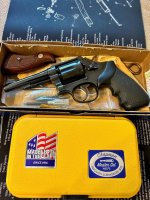
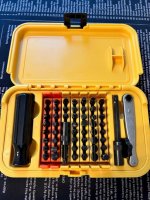
I use a Chapman screwdriver set for removing the sideplate. These are really great sets, made in the USA, for working on guns, scopes, etc. I am not a gunsmith and I've only completely disassembled a Model 65 that needed some work. All my revolvers are DA/SA so getting the transfer bar in place always gives me a bit of problem. Is there a simple way to do it?
Attachments
Toolguy
Member
There is an easy way. Ruger has a transfer bar, S&W has a hammer block. They operate in opposite ways.
When you put the hammer block in, it needs to stay all the way in the up position on the pin of the rebound slide. The way to keep it there till you get the sideplate on is to roll the gun CCW with the grip about 30 degrees up in the air, barrel on the bench. Gravity will then help hold it in place until the sideplate is seated enough to keep it there. The gun can then be rolled back down on the bench and finished off as normal.
When you put the hammer block in, it needs to stay all the way in the up position on the pin of the rebound slide. The way to keep it there till you get the sideplate on is to roll the gun CCW with the grip about 30 degrees up in the air, barrel on the bench. Gravity will then help hold it in place until the sideplate is seated enough to keep it there. The gun can then be rolled back down on the bench and finished off as normal.

chief38
Member
- Joined
- Apr 4, 2006
- Messages
- 21,173
- Reaction score
- 35,662
Here is my opinion......
If you are familiar with how a S&W revolver works, comes apart and gets reassembled, I would say that it should be disassembled every few years or so (depending on how much it has been shot and or carried) for a cleaning and re-lubrication. I would also say that if you are not at all familiar with the details and workings, you would be better off leaving it to a professional GS which is not a big job, doesn't take long and should not be too expensive.
S&W revolvers are stout and relatively forgiving and I know plenty who own them for decades and have never had them opened up. While they may be a bit less than "slick" they do still function.
If you are familiar with how a S&W revolver works, comes apart and gets reassembled, I would say that it should be disassembled every few years or so (depending on how much it has been shot and or carried) for a cleaning and re-lubrication. I would also say that if you are not at all familiar with the details and workings, you would be better off leaving it to a professional GS which is not a big job, doesn't take long and should not be too expensive.
S&W revolvers are stout and relatively forgiving and I know plenty who own them for decades and have never had them opened up. While they may be a bit less than "slick" they do still function.
There is an easy way. Ruger has a transfer bar, S&W has a hammer block. They operate in opposite ways.
When you put the hammer block in, it needs to stay all the way in the up position on the pin of the rebound slide. The way to keep it there till you get the sideplate on is to roll the gun CCW with the grip about 30 degrees up in the air, barrel on the bench. Gravity will then help hold it in place until the sideplate is seated enough to keep it there. The gun can then be rolled back down on the bench and finished off as normal.
Thanks for the information and the correction. I was using the wrong nomenclature for the part. Hammer block is one of the internal safeties that doesn't allow firing pin contact unless the trigger is pulled.
Marshal Tom
Member
I recently purchased a 649-1 and sold my M&P 340.I owned the 340 for many years but never opened it up myself. I would think that the shrouded hammer models would collect more crud than the others and should be taken apart every so often for cleaning.

Remove side plate. Spray out the insides with Gun Scrubber (or similar) Spray it out with a can of compressed air, Apply a few drops of lube to critical parts. Close it up. Test function. Done
I've disassembled and reassembled semi auto rifles and handguns, pump shotguns, bolt action bolts and repaired/refinished several single shot rifles and shotguns. But, I've never been inside any revolver, S&W or no.
There is little bug in me that keeps saying "Go in there and do something. If not a trigger job, at least clean and oil ". I'm not sure if I want to do a trigger job so clean and oil.
Not a gunsmith but a fairly good "Tinkerra". I think so anyway.
There is little bug in me that keeps saying "Go in there and do something. If not a trigger job, at least clean and oil ". I'm not sure if I want to do a trigger job so clean and oil.
Not a gunsmith but a fairly good "Tinkerra". I think so anyway.

I usually just remove the grips, cock the hammer, and spray gun scrubber into the hammer area until it runs out the trigger slot. I dont remove a side plate unless something really needs attention. In my opinion, a periodic cleaning seldom requires it.
Robert
Robert
I usually just remove the grips, cock the hammer, and spray gun scrubber into the hammer area until it runs out the trigger slot. I dont remove a side plate unless something really needs attention. In my opinion, a periodic cleaning seldom requires it.
Robert
Robert
kbm6893
Member
I usually just remove the grips, cock the hammer, and spray gun scrubber into the hammer area until it runs out the trigger slot. I dont remove a side plate unless something really needs attention. In my opinion, a periodic cleaning seldom requires it.
Robert
Right before Covid hit, I bought a LNIB 15-2 from my gun shop. Looked unfired. Beautiful on the outside. But the cylinder was sluggish to open and it didn't spin freely. Cocking the hammer was a bit sluggish, too. I was hesitant to open up such a pristine example so I cocked the hammer and blasted non chlorinated brake cleaner in there, then followed by compressed air. No improvement. So I opened the gun up. There was concealed goo in there, probably from the original owner squirting oil or solvent into the action over 5 decades. Looked like ear wax. But the break cleaner left a white film over everything. Took it all apart and properly cleaned and lubed. It's working the way it was designed to, now.
I was not impressed with the "cock the hammer and spray stuff into the action followed by compressed air" technique. I never advise it anymore. It is not even close to a substitute for a real cleaning.
But most of the ones I have opened up just needed a quick wipe and then a lube, and further disassembly wasn't required.
Right before Covid hit, I bought a LNIB 15-2 from my gun shop. Looked unfired. Beautiful on the outside. But the cylinder was sluggish to open and it didn't spin freely. Cocking the hammer was a bit sluggish, too. I was hesitant to open up such a pristine example so I cocked the hammer and blasted non chlorinated brake cleaner in there, then followed by compressed air. No improvement. So I opened the gun up. There was concealed goo in there, probably from the original owner squirting oil or solvent into the action over 5 decades. Looked like ear wax. .
This is exactly the scenario where removing the sideplate is warranted.
Robert
kbm6893
Member
This is exactly the scenario where removing the sideplate is warranted.
Robert
Of course. That’s why I did it. But sometimes it’s not quite so bad in there and the symptoms don’t show as easily. And spraying brake cleaner into the action followed by compressed air only made a bad situation worse.

nicky4968
Member
- Joined
- May 31, 2003
- Messages
- 1,788
- Reaction score
- 1,065
- City & State/Province
- Littleton, Colorado, USA
Support your local gunsmith.
(His/Her children need shoes, too.)
(His/Her children need shoes, too.)
rct269
Member
Let me suggest "cleaning" a S&W revolver (or any other gun) with anything that comes out of a spray can simply moves the crud from one place inside the gun to another place inside the gun---no matter how much of the contents you let run out of the gun.
And that brings up the topic of fishing tackle, which most folks will tell you is made to catch fish. I will tell you it's made to sell to fishermen.
Ralph Tremaine
And that brings up the topic of fishing tackle, which most folks will tell you is made to catch fish. I will tell you it's made to sell to fishermen.
Ralph Tremaine
Let me suggest "cleaning" a S&W revolver (or any other gun) with anything that comes out of a spray can simply moves the crud from one place inside the gun to another place inside the gun---no matter how much of the contents you let run out of the gun.
And that brings up the topic of fishing tackle, which most folks will tell you is made to catch fish. I will tell you it's made to sell to fishermen.
Ralph Tremaine
I don't think I can agree with you about anything that comes out of a spray can. I picked up a 1960s Winchester 94 from the pawn shop some years ago that was pretty nasty. I sprayed the innards with gun scrubber then flushed it out with wd40. Later when I learned how to take it apart "and put it back together" I was really surprised at how clean it was.
But, I agree with you on the fishing tackle. Same with dog food.
rct269
Member
WD4O?!!!!!!!!!!!
GOD FORBID!!!!!!!!!!!!!!!!!!!!!!!!!!!!!!!!!!!!!!!!!!!!!!!!!!!!!!!!!!!!!!!!!!!!!!!!!!
WD40 is, and I quote, "a water displacement formula"----and it works GREAT---at that. It ain't much of a lubricant, doesn't protect much of anything, never mind anything you might have read elsewhere, and it gets really nasty when it gets old----if/when you are so unfortunate as to let it get old. "Let the buyer beware!"
There was a time---a looooooooooong time ago----in a land far, far away---when "the sewers backed up" (!!!!!!!!!!!). We lived in Chicagoland at the time---in what I have come to call "a hot-shot insurance executive's tri-level, split-level house". There was a pretty much still brand new Browning Auto 5 in a fancy leather case sitting on the floor---in the LOWER level. Now this fancy house was in a fancy suburb with sewers built by the lowest bidder--------and they leaked. This was well known by the folks who'd lived there for a while, but we were "the new kids on the block"---from Philadelphia-----where pretty much NOTHING is new------and pretty much none of the streets run in a straight line-----and pretty much ALL of the streets change names as they go-----with no notification whatsoever. Good luck getting around!!! (Snarky comments from one who was deliriously happy to leave Philadelphia after only three years.)
So---the sewers leaked. You might very well never have thought of it, but anything that leaks can, and does, leak in both directions----out---and IN!! So here's this FLAT land sitting next to this small ocean--and what they call the "water table" is high----which means you don't have to dig down very far before you hit----ah---moisture. Add to this a toad strangling, gulley washing rain storm helped along by the proximity to this small ocean, and there was A BUNCH of-----ah---moisture, leaking INTO the sewers----and they couldn't help it. There's stuff coming out of the floor drain in the laundry room, the toilet next door, the cracks in the concrete, and every place else that had a place---into my shotgun case!!!!----and everywhere else in the lower level!!! This is not nice!
So, they leaked. Needless to say, "panic reigned supreme"!!!! I hosed down that shotgun with copious quantities of WD40---and it saved the day----until I could take it apart----ALL APART----never mind I'd never done it before.
Now---how do I get this WD40 stuff the hell out of there?!! This is a concern, because WD40 undergoes a mysterious transformation as it ages---turns into what one might call SLUDGE!!
And as an aside, I got that shotgun back together---and it actually worked!!!
Stranger things have happened!
Ralph Tremaine
OH!!---and by the way, if you want something that actually does what you might think WD40 does, it's called CorrosionX----and it ain't cheap----it's GOOD!!
GOD FORBID!!!!!!!!!!!!!!!!!!!!!!!!!!!!!!!!!!!!!!!!!!!!!!!!!!!!!!!!!!!!!!!!!!!!!!!!!!
WD40 is, and I quote, "a water displacement formula"----and it works GREAT---at that. It ain't much of a lubricant, doesn't protect much of anything, never mind anything you might have read elsewhere, and it gets really nasty when it gets old----if/when you are so unfortunate as to let it get old. "Let the buyer beware!"
There was a time---a looooooooooong time ago----in a land far, far away---when "the sewers backed up" (!!!!!!!!!!!). We lived in Chicagoland at the time---in what I have come to call "a hot-shot insurance executive's tri-level, split-level house". There was a pretty much still brand new Browning Auto 5 in a fancy leather case sitting on the floor---in the LOWER level. Now this fancy house was in a fancy suburb with sewers built by the lowest bidder--------and they leaked. This was well known by the folks who'd lived there for a while, but we were "the new kids on the block"---from Philadelphia-----where pretty much NOTHING is new------and pretty much none of the streets run in a straight line-----and pretty much ALL of the streets change names as they go-----with no notification whatsoever. Good luck getting around!!! (Snarky comments from one who was deliriously happy to leave Philadelphia after only three years.)
So---the sewers leaked. You might very well never have thought of it, but anything that leaks can, and does, leak in both directions----out---and IN!! So here's this FLAT land sitting next to this small ocean--and what they call the "water table" is high----which means you don't have to dig down very far before you hit----ah---moisture. Add to this a toad strangling, gulley washing rain storm helped along by the proximity to this small ocean, and there was A BUNCH of-----ah---moisture, leaking INTO the sewers----and they couldn't help it. There's stuff coming out of the floor drain in the laundry room, the toilet next door, the cracks in the concrete, and every place else that had a place---into my shotgun case!!!!----and everywhere else in the lower level!!! This is not nice!
So, they leaked. Needless to say, "panic reigned supreme"!!!! I hosed down that shotgun with copious quantities of WD40---and it saved the day----until I could take it apart----ALL APART----never mind I'd never done it before.
Now---how do I get this WD40 stuff the hell out of there?!! This is a concern, because WD40 undergoes a mysterious transformation as it ages---turns into what one might call SLUDGE!!
And as an aside, I got that shotgun back together---and it actually worked!!!
Stranger things have happened!
Ralph Tremaine
OH!!---and by the way, if you want something that actually does what you might think WD40 does, it's called CorrosionX----and it ain't cheap----it's GOOD!!
Last edited:
rct269
Member
AND----speaking of CorrosionX, it plays a role in what's become known as "Ralph's Bath"----a routine applied to each and every beat-up, nasty old S&W that came to live here.
Goes like this: Step One: The gun comes apart----ALL apart---not counting barrels and action studs. Everything gets soaked in Mineral Spirits for 2-3 days---or until I get back to it. Then it gets scrubbed to within an inch of its life---including the screw holes(!!), rinsed with CLEAN Mineral Spirits, and blown dry with DRY, high pressure compressed air (125 psi line pressure). Then all the pieces get hosed down with CorrosionX, and left to sit for 2-3 days----or until I get back to it. Everything then gets blasted with this DRY, high pressure compressed air again to remove as much of the CorrosionX as will come off. Then the pieces get stuffed back together into a gun, and the exterior gets washed down with Hoppes #9 to remove all the remaining CorrosionX----dried and polished with a soft cloth------'cause there's NOTHING that looks worse than a gorgeous blue finish with oil on it!!!!! Then the gun goes on a shelf in the display cabinet. As another aside, there were guns sitting in that cabinet for the better part of 30 years with no further attention than getting the dust vacuumed off about twice a year----'cause the cabinet wasn't air tight----and there was nary a problem with ANYTHING----NO corrosion---NO sludge----No nothing!! OH!!--and by the way, there was NO lubrication of anything, because CorrosionX has enough lubrication qualities to suffice----even for guns that are used for guns.
And as an aside, not counting CorrosionX, entirely adequate lubrication of a S&W hand ejector revolver action is obtained with ONE drop of oil on the hammer stud--ONE drop on the trigger stud, ONE drop under, and ONE drop on the back of the recoil slide. Those with some sort of obsessive compulsive disorder put a half a drop on the cylinder stop stud. You can use more---it's good for holding on to dirt.
Ralph Tremaine
OH!-----lead removed from the barrel/cylinder chambers: That's actually Step One of the bath: Go to the Notable Thread Index in the early hand ejector section. Go to the "lead in barrel" thread. Do what you're told to do. You end up with squeaky clean barrels and chambers----with no fuss, no muss, and no bother!!----with this proviso: First---DRY THE BORES!!!!
Goes like this: Step One: The gun comes apart----ALL apart---not counting barrels and action studs. Everything gets soaked in Mineral Spirits for 2-3 days---or until I get back to it. Then it gets scrubbed to within an inch of its life---including the screw holes(!!), rinsed with CLEAN Mineral Spirits, and blown dry with DRY, high pressure compressed air (125 psi line pressure). Then all the pieces get hosed down with CorrosionX, and left to sit for 2-3 days----or until I get back to it. Everything then gets blasted with this DRY, high pressure compressed air again to remove as much of the CorrosionX as will come off. Then the pieces get stuffed back together into a gun, and the exterior gets washed down with Hoppes #9 to remove all the remaining CorrosionX----dried and polished with a soft cloth------'cause there's NOTHING that looks worse than a gorgeous blue finish with oil on it!!!!! Then the gun goes on a shelf in the display cabinet. As another aside, there were guns sitting in that cabinet for the better part of 30 years with no further attention than getting the dust vacuumed off about twice a year----'cause the cabinet wasn't air tight----and there was nary a problem with ANYTHING----NO corrosion---NO sludge----No nothing!! OH!!--and by the way, there was NO lubrication of anything, because CorrosionX has enough lubrication qualities to suffice----even for guns that are used for guns.
And as an aside, not counting CorrosionX, entirely adequate lubrication of a S&W hand ejector revolver action is obtained with ONE drop of oil on the hammer stud--ONE drop on the trigger stud, ONE drop under, and ONE drop on the back of the recoil slide. Those with some sort of obsessive compulsive disorder put a half a drop on the cylinder stop stud. You can use more---it's good for holding on to dirt.
Ralph Tremaine
OH!-----lead removed from the barrel/cylinder chambers: That's actually Step One of the bath: Go to the Notable Thread Index in the early hand ejector section. Go to the "lead in barrel" thread. Do what you're told to do. You end up with squeaky clean barrels and chambers----with no fuss, no muss, and no bother!!----with this proviso: First---DRY THE BORES!!!!
Last edited:
AND----speaking of CorrosionX, it plays a role in what's become known as "Ralph's Bath"----a routine applied to each and every beat-up, nasty old S&W that came to live here.
Goes like this: Step One: The gun comes apart----ALL apart---not counting barrels and action studs. Everything gets soaked in Mineral Spirits for 2-3 days---or until I get back to it. Then it gets scrubbed to within an inch of its life---including the screw holes(!!), rinsed with CLEAN Mineral Spirits, and blown dry with DRY, high pressure compressed air (125 psi line pressure). Then all the pieces get hosed down with CorrosionX, and left to sit for 2-3 days----or until I get back to it. Everything then gets blasted with this DRY, high pressure compressed air again to remove as much of the CorrosionX as will come off. Then the pieces get stuffed back together into a gun, and the exterior gets washed down with Hoppes #9 to remove all the remaining CorrosionX----dried and polished with a soft cloth------'cause there's NOTHING that looks worse than a gorgeous blue finish with oil on it!!!!! Then the gun goes on a shelf in the display cabinet. As another aside, there were guns sitting in that cabinet for the better part of 30 years with no further attention than getting the dust vacuumed off about twice a year----'cause the cabinet wasn't air tight----and there was nary a problem with ANYTHING----NO corrosion---NO sludge----No nothing!! OH!!--and by the way, there was NO lubrication of anything, because CorrosionX has enough lubrication qualities to suffice----even for guns that are used for guns.
And as an aside, not counting CorrosionX, entirely adequate lubrication of a S&W hand ejector revolver action is obtained with ONE drop of oil on the hammer stud--ONE drop on the trigger stud, ONE drop under, and ONE drop on the back of the recoil slide. Those with some sort of obsessive compulsive disorder put a half a drop on the cylinder stop stud. You can use more---it's good for holding on to dirt.
Ralph Tremaine
OH!-----lead removed from the barrel/cylinder chambers: That's actually Step One of the bath: Go to the Notable Thread Index in the early hand ejector section. Go to the "lead in barrel" thread. Do what you're told to do. You end up with squeaky clean barrels and chambers----with no fuss, no muss, and no bother!!----with this proviso: First---DRY THE BORES!!!!
Well, Dang it. I guess I'm going to have to disagree again.
I have been using Wd40 on guns for over 60 years now. All kinds of guns. Most I still have.
Remington 700 Bought new in 1974. Hunted in rain, snow, ice, dew, fog, heat and cold. Most time 2 days per week during season. Got wiped down inside and out "wipe on, lightly wipe off excess after each day of hunting. Most time the only lubricant used.
Still have that gun. Never a part replaced, never a repair, never a single fail of any kind. Still all original blue, wood and finish. Never ever a speck of rust. Next year it will be 50 years old. And I have no doubt it will still be going 50 years from now.
Same with other rifles, shot guns And handguns I have.
WD gets a lot of undeserved criticism. Mostly internet hog wash and for not doing what it's not advertised to do.
1978 H&R 650 Same.
Now, I do not recommend Wd as the sole lube for most guns. Not at all. But for what it's advertised to do. Highly.
It's fantastic on guns.
Well, I was going to show photos. But can't.

- Joined
- May 2, 2012
- Messages
- 6,703
- Reaction score
- 13,245
- City & State/Province
- Evansville, Indiana USA
As a "long time" police armorer, (hate to say just how long) I've had my more than my share of run in's with WD-40. Police officers love this horrible stuff. Ranks as the #1 worst, right up there with RemOil.
This concoction advertized as a "penetrant" can easily be characterized as the worst thing to introduce into the internal lockwork of any valued firearm.....especially by spraying. After storage, soaking and scraping will be required to remove that "hard as concrete" varnish that forms when this garbage accumulates and sits still for a while.
Do yourself a favor and purchase high quality, recommended products specifically designed to be used on and in firearms.
Carter
This concoction advertized as a "penetrant" can easily be characterized as the worst thing to introduce into the internal lockwork of any valued firearm.....especially by spraying. After storage, soaking and scraping will be required to remove that "hard as concrete" varnish that forms when this garbage accumulates and sits still for a while.
Do yourself a favor and purchase high quality, recommended products specifically designed to be used on and in firearms.
Carter
As a "long time" police armorer, (hate to say just how long) I've had my more than my share of run in's with WD-40. Police officers love this horrible stuff. Ranks as the #1 worst, right up there with RemOil.
This concoction advertized as a "penetrant" can easily be characterized as the worst thing to introduce into the internal lockwork of any valued firearm.....especially by spraying. After storage, soaking and scraping will be required to remove that "hard as concrete" varnish that forms when this garbage accumulates and sits still for a while.
Do yourself a favor and purchase high quality, recommended products specifically designed to be used on and in firearms.
Carter
Ok, Thanks for the warning.
I've only been using Wd for something over 60 years now and haven't seen that " Hard AS Concrete" varnish yet. But maybe in the next 60. I'll keep watching and if I find any I'll do the " Soaking and scraping you say will be "Required".
Again, Thanks for the warning.
chief38
Member
- Joined
- Apr 4, 2006
- Messages
- 21,173
- Reaction score
- 35,662
As a "long time" police armorer, (hate to say just how long) I've had my more than my share of run in's with WD-40. Police officers love this horrible stuff. Ranks as the #1 worst, right up there with RemOil.
This concoction advertized as a "penetrant" can easily be characterized as the worst thing to introduce into the internal lockwork of any valued firearm.....especially by spraying. After storage, soaking and scraping will be required to remove that "hard as concrete" varnish that forms when this garbage accumulates and sits still for a while.
Do yourself a favor and purchase high quality, recommended products specifically designed to be used on and in firearms.
Carter
WD-40 is a great product for certain uses - guns not being one of them. WD-40 gets used in my house to clean tar off of car rims, recondition a stainless steel appliance front, remove black marks from certain painted surfaces, and if I run out of Tap Magic for Aluminum, I will substitute WD-40 while tapping threads until I get the Tap Magic for Aluminum again.
For guns I've been using G96 Synthetic CLP and prior to that Break-free CLP. WD-40 is not a good lubricant or rust inhibitor IMHO but will clean off greasy tools pretty well. Despite what they claim on the label, WD does not get even close to my gun tool box and I do stick with dedicated gun oils and solvents for that purpose. BTW, G96 Gun Oil works GREAT on sliding glass doors too.
Last edited:
I’ve used a M38 since I got my first in 1979 along with a M42. I think the M38 is the best pocket pistols ever made, with the M49 and M42 close behind. I’ve never felt the need to remove the side plate. The guns have worked just fine without fiddling around taking the side plate off.
I exclusively carry these in a pocket without pocket holster. I mention my carry method because folks often imagine these models might collect junk around the hammer that might impede functioning, a similar fear to those imagining a need to fiddle removing the side plate. This doesn’t happen: no junk collects to interfere with the gun’s function.
Folks enjoy fiddling with their guns: most spend a lot less time actually shooting than handing them for cleaning, dry fire and beautifying. No harm in that, but we shouldn’t imagine that it’s necessary.
I’d leave the side plate alone unless you dropped the gun in a mud puddle and left it there for a while.
I exclusively carry these in a pocket without pocket holster. I mention my carry method because folks often imagine these models might collect junk around the hammer that might impede functioning, a similar fear to those imagining a need to fiddle removing the side plate. This doesn’t happen: no junk collects to interfere with the gun’s function.
Folks enjoy fiddling with their guns: most spend a lot less time actually shooting than handing them for cleaning, dry fire and beautifying. No harm in that, but we shouldn’t imagine that it’s necessary.
I’d leave the side plate alone unless you dropped the gun in a mud puddle and left it there for a while.

As a "long time" police armorer, (hate to say just how long) I've had my more than my share of run in's with WD-40. Police officers love this horrible stuff. Ranks as the #1 worst, right up there with RemOil.
I read all your posts, armorer951 and respect your opinions. Your posts make good sense to me. So I'm curious, what's the difficulty with RemOil? I've heard from any number of sources that RemOil is vile stuff ranging anywhere in between ineffective and destructive. And then, some folks claim it's good stuff.
Can you elaborate a bit about RemOil's inadequacies? For the record, I use Super Lube oil and grease, Gun Butter and good ole Lubriplate depending on the application.
Thanks!
chief38
Member
- Joined
- Apr 4, 2006
- Messages
- 21,173
- Reaction score
- 35,662
I read all your posts, armorer951 and respect your opinions. Your posts make good sense to me. So I'm curious, what's the difficulty with RemOil? I've heard from any number of sources that RemOil is vile stuff ranging anywhere in between ineffective and destructive. And then, some folks claim it's good stuff.
Can you elaborate a bit about RemOil's inadequacies? For the record, I use Super Lube oil and grease, Gun Butter and good ole Lubriplate depending on the application.
Thanks!
Many years ago I used Remoil exclusively on my firearms. Never had any issues with it and found it was a descent lubricant and preservative but not a very good cleaner. Not nearly as good as G96 or Breakfree CLP but I never experienced any issues at all. Never had it gum up or turn nasty. While not the best CLP out there, I don't understand why it gets such a bad reputation. The ONLY thing I can think of is that the carrier evaporates fast but does leave protection behind - maybe some believe because the carrier evaporates that it is no longer on the metal.
Similar threads

- Replies
- 9
- Views
- 417


