Grip finish

Montgomery

Member
Joined
Oct 18, 2019
Messages
12
Reaction score
40
City & State/Province
SC
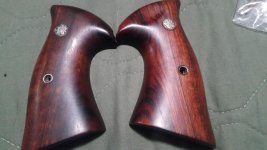
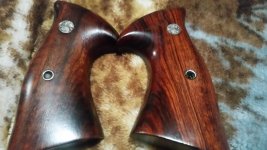
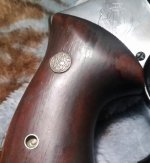
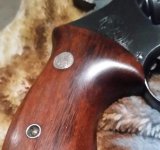
I got a 29 with the original cokes on it. They are in very good condition but are a bit dry. I have two questions for the group:
1. will it effect the collectability of the gun to oil the grips?
2. If the answer to 1. is no, what do people use?

Thanks
 
Last edited:
As long as you wax or oil them in a way that closely resembles the original finish you shouldn't have to worry about decreasing their value. Others here will give you the proper type of oil if they are in need of it (photos always help).
 
I wipe them down with old craftsmen lemon oil furniture polish after every use. I got that in a high end shotgun store and have used it ever since.

It does not alter or effect the wood but livens them up and prevents them from drying out.
 
Grips (stocks) don't have "wax" once you wax them you make them resistant to oil which is naturally occurring in wood. If the finish is sound and not worn then maybe some wax.

"nourish the wood and all that jazz";)

Use some thinned tung oil, it penetrates better than BLO
 
Thanks for the suggestion. Once I do them I’ll post before and after pics.
 
[QUOTE Use some thinned tung oil, it penetrates better than BLO[/QUOTE]

What do you use to thin tung oil?
 
I use Murphy's Oil Soap on old rifle & revolver stocks first to clean general grime off, be cause it doesn't damage anything. Then I have some (forgetting the name now) wood rejuvenator wit beeswax that will keep them from drying out. Finally wax if I want a sheen.
 
I use just plain old "Liquid Gold" furniture/wood cleaner and nourish. Works great to clean and replenish natural oils on all my guns. Cheap can be bought anywhere and also can be used around the house. A little tip it works wonders on grante countertops too!! My brother in law works in a granite shop and is exactly what they use after the pieces are polished. Enjoy
 
I use Murphy's Oil Soap on old rifle & revolver stocks first to clean general grime off, be cause it doesn't damage anything. Then I have some (forgetting the name now) wood rejuvenator wit beeswax that will keep them from drying out. Finally wax if I want a sheen.

I also occasionally use Murphy's Oil soap on old severaly dirty gun stocks, but a "wood guru" from another site said it's terrible to use. I've cut and pasted from one of his posts below:
"Oil soap is actually harmful to your wood floors. Many floor manufacturers explicitly state that oil soap should not be used to clean wood floors. For example, the Bellawood Prefinished Hardwood Floors Certified 50 Year Warranty expressly states, "Do not wash or wet mop the floor with, oil-soap detergent or any other liquid cleaning/polishing material containing oils such as Mineral Oil.

This can cause swelling, warping, delamination, and joint-line separation, and void the warranty." When you apply oil soap, you are leaving a residue on your wood floors. This residue will turn into streak marks. You are putting vegetable oil soap on your wood floors and leaving it on. All of your wood surfaces will have an oil soap coating on them. This makes the finish on your floors look dull and over time will penetrate the finish causing it to lift and separate from the wood substrate.

When you use Murphy's Oil Soap, you will quickly learn that the advertising claims are fictitious. Obviously, this is not an advisable cleaning method. This is not even cleaning. It is just coating your floors with an oily, sticky residue! If you decide to clean your floors with oil soap, you will notice that in as few as five years, your floors will need to be stripped an recoated with topcoat. The oily residue left behind from oil soap will remain so much so that it may very likely gum up the screening disk when you recoat your floor in the future. Also, the new coating may have adhesion problems. Many homeowners have permanently ruined hardwood floors from using oil soap products.

Despite its popularity, I would not use it on my own wood floors nor would I recommend it. I am talking about sealed hardwood floors. Even though Muphy's Oil Soap is formulated for sealed hardwood floors, you want to stay far away from it! As you now know, Murphy's Oil Soap makes many misleading and false claims that sound convincing to anyone who has not done adequate research. For example, it promises to leave no residue behind. It is also supposed to remove wax build-up.

If you decide to give Murphy's Oil Soap a try, the next step will be learning how to remove it! An effective technique to remove the oily residue is with vinegar or glass cleaners. Murphy's Oil Soap can penetrate into the surface of the wood. When it is time to get your hardwood floors refinished, they will have to be sanded down past the oil build-up in order for the new finish to adhere. Murphy's Oil Soap can react with the finish softening it and making it dull. This is obviously irreversible.

If you are smart, please do not listen to the seemingly compelling advertisements about Murphy's Oil Soap. Using oil soap will void your wood floor warranty!"

I still use it when I feel it's needed, but I'm more cautious with it now.
 
There really isn’t a universal correct answer here. Different stocks, different answer. I’ll caution you on using wax. I love renaissance wax and thought it couldn’t hurt a dried set of stocks. I was wrong. It left a cloudy finish that would not come out. I tried everything. Finally had to strip the finish. I have found that a super thin coat of boiled linseed oil works well. Hope this helps.
 
I use, sparingly and with patience, BLO. Tung oil is my second choice. I keep both around. Both are good, but clean the wood first to get any grime off. Checkering presents special challenges that can be overcome with a toothbrush. A little bit of oil goes a long way, otherwise you can have a mess on your hands.
 
I had Mr Hogue of Hogue grips tell me he would only ever put wax on grips. His had no type of finish other than wax on his grips. S&W puts a finish similar to Tru-Oil on it's stocks (or did in the past). I have no idea what may be on them currently, and so many are now rubber/plastic.
 
A safe and easy product to use is Howard Feed-N-Wax wood preserver.
Contains beeswax and orange oil . Rub on a liberal coat , let stand 20 mins. wipe off excess and polish with a clean dry cloth .
This stuff rejuvenates the wood and existing finish , leaving a nice bees wax finish .
Works really well on old stocks you don't want to totally strip and refinish .
Howard Products, Inc. - Wood Care Made Easy
Gary
 
Last edited:
Grips (stocks) don't have "wax" once you wax them you make them resistant to oil which is naturally occurring in wood. If the finish is sound and not worn then maybe some wax.

"nourish the wood and all that jazz";)

Use some thinned tung oil, it penetrates better than BLO[/quot

Don't like Jazz...... just results.


This is the type of finish that I believe his Cokes have. If set one doesn't convince you maybe set 2 will. Again the same finish his Cokes most likely have except pretty harsh.

Wax has been used for hundreds of years on wood. It protects it from drying out and loosing those oils.
 

Attachments

  • 20191125_162536.jpg
    20191125_162536.jpg
    61.2 KB
  • 20191125_194926.jpg
    20191125_194926.jpg
    73.5 KB
  • 2019-11-26 19.00.45.jpg
    2019-11-26 19.00.45.jpg
    48.8 KB
  • 2019-11-26 19.03.36.jpg
    2019-11-26 19.03.36.jpg
    54.7 KB
Last edited:
If you're worried about the collectors value I would not using boiled linseed oil or tung oil.

I have found rubbing in some lemon oil will stop the drying, protect the wood and the value of the grips too. It smells good too lol.
 
I use Formbys tung oil low gloss on all my woods if the need touchup. My outdoor hunting woods get sealed good between 6 to 10 coats depending how the wood sucks it in. Then 0000 steelwool lightly to remove any flaws then wax it. I hand rub the tung oil.
 
Back
Top