Removing sideplate when cleaning?

slickracer

Member
Joined
Oct 22, 2012
Messages
802
Reaction score
653
City & State/Province
Pennsylvania
I'm curious how often you all remove the sideplate when cleaning? Is it even necessary or something that should be done periodically?
 
While I have had the side plate off of many revolvers,
It's not something I do on a regular basis.
If it's real old and feels gummy, maybe.
If you have reason to believe that a lot of grit
or something got in the works, you can always just
flush it out with clp.
 
I used to remove the sideplate, but not any more. Its easier to spray Gunscrubber through the action whenever I clean. Most of the time, the fluid comes out clear. You have to know what you're doing when removing a sideplate; I won't go into it.
The last time I did it was 3 years ago when I bought 2 M-64s that had been casino security guns. They were so gunked up on the inside from excess lubricant(?) and heaven knows what else that the actions were sticky and balky. With the gunk removed, both actions were perfect.

Let a 'smith remove the sideplate or show you how to do it. I can see doing it on a range rental gun that is almost never cleaned, but not as a general practice on a personal gun. JMHO. Hope I've helped.
 
Guys, thanks for the quick responses. I was just curious as I'm fortunate to have a 617, 686, 24-3, 27-2 and a 14-3 and want to give them the care they deserve. I meticulously clean them after range sessions and want to make sure I'm not dropping the ball on maintenance. They are all nice pieces and I'd like to keep them in top shape.

Thanks!
 
Guys, thanks for the quick responses. I was just curious as I'm fortunate to have a 617, 686, 24-3, 27-2 and a 14-3 and want to give them the care they deserve. I meticulously clean them after range sessions and want to make sure I'm not dropping the ball on maintenance. They are all nice pieces and I'd like to keep them in top shape.

Thanks!

Every few years with range guns it might be good to
just flush them with clp. You'll most likely never have to
remove the side plate. It's a bit messy and they need a little
while for all the clp to drain out.
 
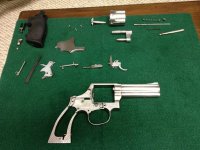
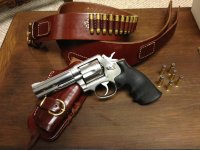
About once a year. This past year I was rough on my 681 (seven days straight outdoors in the muggy summer while camping for one) and it had a bit of surface rust. More than I was happy with. It came off easily though. I cleaned everything with Hoppes then hit it with CLP. I just started using it within the past year and it's worked well on my Astra so far. I left the cylinder stop and spring in place because it was a pain last time around. I just moved it up the peg a bit to clean behind it.

ImageUploadedByTapatalk1363488994.800094.jpg
ImageUploadedByTapatalk1363489013.667343.jpg
 
I'm curious how often you all remove the sideplate when cleaning? Is it even necessary or something that should be done periodically?

Never unless you have: (1) over lubed the inside causing collection of gunk resulting in a sluggish action, (2) dropped it into the ocean or a mud hole or sand pit; and, (3) then ONLY if you have proper tools and training.

I don't believe the owner's manual says to do it. Have you read the instructions?
 
I just posted to another thread about a M57 at a pawn shop I passed on because it was so obvious the side plate was removed and damaged by somebody that did not know what they were doing. Most used revolver buyers look at side plates for this damage or at least I do.
 
Never unless you have: (1) over lubed the inside causing collection of gunk resulting in a sluggish action, (2) dropped it into the ocean or a mud hole or sand pit; and, (3) then ONLY if you have proper tools and training.

I don't believe the owner's manual says to do it. Have you read the instructions?

Yes, I have. I believe we would all agree we care more for our revolvers than the average Joe hence I asked the question.

Thank you
 
Last edited:
I've been known to purchase battered old surplus revolvers that have seen service all over the world.

Some definately need repair and disassembly is a must in those cases.

Some of these old revolvers come to me working fine..but full of crud and rust under grips in in crevices(such as sideplates). You would be shocked at the amount of crud that can accumulate inside a DA revolver and the gun still work fine!

On occasion I get hold of some old revolver..or not so old revolver that is clean...works fine..and really doesn't need scattered and deep-cleaned. These I usually just flush out with brake-cleaner and compressed air and re-lube.

Taking off a revolver's sideplate is something that I really don't consider a part of normal maintenance...unless it's a well used or really dirty guv/leo trade-in gun you know is full of crud...or you dropped your carry-revolver in the sand..I wouldn't bother taking it apart.

The one exception to 'not unless absolutely neccesary' philosophy would be black-powder/percussian revolvers...yeh probably should take these apart all the way..or at least as far as possible and clean/lube well!!
 
Kinda like removing the valve covers to change the oil in your car... only if you have the knowledge to put it back together do you take it apart...
 
It's usually not necessary with more modern revolvers. In fact, S&W used to recommend just putting a few drops of good oil down in front of the hammer and through the hand slot.

However, with older revolvers, there is often a lot of congealed oil and crud in the action. In this case, it's good to remove the sideplate and use some solvent and a good brush on the internals, followed with a premium oil. As an alternative, I've sprayed WD-40 in there, and then dried it out, followed with a good oil on the internal contact points.

Removing the sideplate is usually quite easy, but it has to be done right, tapping the frame away from the unscrewed sideplate with a plastic hammer or wooden handle. It should never be pried. There are plenty of illustrations of the proper procedure on the internet or most gun takedown instructions.

I do, however, routinely remove the cylinder and yoke whenever cleaning a revolver, as this relieves stress on the yoke-frame interface when vigorously brushing the chambers.

John
 
I'll remove the side plate when I first purchase a used gun. If things look good, I'll lube and replace. If there's corrosion or nasty gunk in there, I do a detail cleaning and relube.
The only other time I'll remove the side plate is if the action starts feeling gummy.

I agree - that's my policy too.

Jeff
 
As someone said, better to flush from outside. It's the rare gun that has so much **** in it, it needs to be cleaned (unless it was owned by someone who routinely flushed it from outside with cleaner/lubes...)
 
I strip, detail clean and lube guns that are new to me, some of them have been pretty gunked up inside. Is disassembly absolutely necessary? Probably not, but I can't leave well enough alone. After an initial cleaning I may occasionally remove the crane and cylinder to facilitate cleaning as needed.
 
I use an aerosol degreaser, and then aero CLP. Some places offer ultrasonic dipping for pistols. Seems if the gun is collectable and in need of heavy duty cleaning, ultrasonic cleaning would lessen the chances of any damage.
 
I remove it on all used guns that I buy as part of the check-out and cleaning. I use an ultrasonic bath for the cleaning. I also remove the sideplate to put a plug in the place of the keyhole on IL guns. Once you know to ping the gripframe with a hammer handle rather than to pry at it, it is not so scary. But geez how I hate to see one with the little folded up lip at the top where someone clutzed it.
 
I remove it on all used guns that I buy as part of the check-out and cleaning. I use an ultrasonic bath for the cleaning. I also remove the sideplate to put a plug in the place of the keyhole on IL guns. Once you know to ping the gripframe with a hammer handle rather than to pry at it, it is not so scary. But geez how I hate to see one with the little folded up lip at the top where someone clutzed it.
My wife bought her 66-3 new, years before I met her and it has that little folded up lip on it. The screw heads aren't boogered up so maybe it was done at the factory? If I had been with her at the time, I would've requested a different gun, same model. I've never had the side plate off her gun because I don't feel it needs it. The only thing is that if somebody sees that little lip and knows about S&W revolvers they think I did it.
I bought my 442 used and even though it worked fine I pulled the side plate because I knew it had been sitting in a drawer for 17 years. There was some corrosion so I cleaned it up and relubed it.
 
Removing sideplate when cleaning?
No, only when necessary. I need a reason.

I remove it initially on a "new to me" used revolver, but will not again...unless I gunk it up or until I notice an issue.
 
I take everything out of every USED revolver I buy. I degrease everything, blow it out with air, and re-lube and put it back together. Twice, I have had springs turn to dust when I did this. If one spring does this, I replace them all.

After that, It has never been necessary to remove the side plate again.

Should the average Joe do this? Absolutely not. Take it to a real gunsmith who comes recommended first-hand by gun owners (whose opinions you trust) who have nothing but good things to say about the guy. Special tools and knowledge are required for this. Like fixing the transmission on your car, leave it to the Pro. :)
 
I enjoy taking it apart annually, but my fingers aren't what they used to be so lately I've simply done as much surface cleaning internally as possible.

The ejector rod comes out EVERY time. I'm surprised that the majority of folks never even remove the rod.
 
First of removing and reassembling the sideplate and the hammer and trigger is not very difficult nor does it require much in the tools. Actually the only specialized tool I use are gunsmith screwdrivers.

I usually only remove the sideplates and guts when I buy a new to me gun or after long term storage. I recently purchased a used Model 10-7 that the grease under the hammer had turned GREEN. It cleaned up easily enough though.

I believe that more guns are damaged by improper/overzealous cleaning than by just shooting them. My regular range guns usually get cleaned once a year whether they need it or not.
 
I normally only remove a side plate when I first purchase the revolver, then only if there is an indication of need (such as dropped in the creek, or a malfunction to be looked at). Otherwise, I may go many years in between and possibly never again. I recently acquired a 617-6, (est. 2005 ship date) and did a thorough cleaning, and popped the side plate and the revolver was nice and clean, but very dry. I lubed it where needed and put the plate back on.
 
First of removing and reassembling the sideplate and the hammer and trigger is not very difficult nor does it require much in the tools. Actually the only specialized tool I use are gunsmith screwdrivers.

I usually only remove the sideplates and guts when I buy a new to me gun or after long term storage. I recently purchased a used Model 10-7 that the grease under the hammer had turned GREEN. It cleaned up easily enough though.

I believe that more guns are damaged by improper/overzealous cleaning than by just shooting them. My regular range guns usually get cleaned once a year whether they need it or not.

Definitely agree with the last paragraph. Even if you have the right tools which many gun owners don't, and are careful and use the right technique, which many don't, the fewer times the sideplate is removed, the better. :)
 

Latest posts

Back
Top