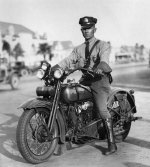
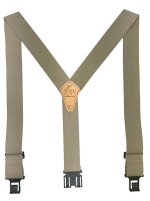
Like all other belts, there are a lot of differences between different makers and construction. Some are simply one layer of leather. Some are two layers, usually with multiple rows of stitching that helps to prevent stretching of the leather. Some are made with a second layer of leather only in the area where the sidearm is to be carries, only one layer around the rest of the waist. Some are made specifically to use with the snap-loops on a leather motorcycle jacket, basically mounting to the waist end of the jacket, usually with secondary clips to hold the jacket tail to the trouser belt and prevent everything from shifting around on the body.
The heavier construction tends to hold up better for extended use, but the purchase price will always be considerably higher than a one-layer belt (less leather, less time assembling, stitching, etc). A good two-layer Sam Browne belt will provide good service for many years, but a lighter one-layer belt may become worn and limp after only a year or two of daily use.
Some use the clip-buckle combination (buckle remains in a fixed position and engages clips mounted in the end of the belt), which is easier to put on and take off and holds its adjustment nicely. Some use an actual buckle, and those tend to wear and become sloppy at the tongue area engaged by the buckle.
Industry standard has always been 2.25" width. A few makers offered belts that were a bit narrower or a bit wider. The major concern is making sure that your holster fits snugly on the belt to prevent it from shifting positions. Keeping everything firmly in position means more (to me) than the weight of the equipment carried.
Over the years I have modified quite a few Sam Browne duty belts and holsters using screw-posts (Chicago screws) to lock the holster and other accessories on the belt at the desired positions.