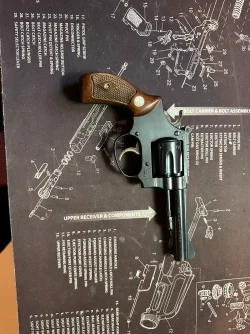
After the ultrasonic cleaner, I'll blow the gun off with compressed air, hose it down with WD-40, wipe off the WD-40 with a rag, then oil like normal with regular gun oil.
I hope you disassembled the gun before putting it in the bath. Otherwise the liquid can get trapped inside and cause lots of problems. I (personally) wouldn't use WD40 anywhere on any firearm. Any left over time turns to a varnish like finish and is difficult to get off, and Never inside any firearm.
It's a 1947 model that I don't know how well it's been cleaned. Looks good from the outside, just wanted to clean it up to my standards. I haven't disassembled it yet but intend to .
It's a 1947 model that I don't know how well it's been cleaned. Looks good from the outside, just wanted to clean it up to my standards. I haven't disassembled it yet but intend to .
I hope you disassembled the gun before putting it in the bath. Otherwise the liquid can get trapped inside and cause lots of problems. I (personally) wouldn't use WD40 anywhere on any firearm. Any left over time turns to a varnish like finish and is difficult to get off, and Never inside any firearm.
Usually disassemble, then if parts need ultrasonic, then okay. Lightly oil and air dry parts, clean inside revolver well using q tip and reassemble dryer off oiled parts. I admit I let my gunsmith do the tricky stuff 2with disassembly of internals. Cheers!
Any gun oil that contains CLP (lightly coated) then apply a bit of Renaissance wax with a cotton cloth, buff it then store somewhere that contains a dehumidifier or dehumidifier rod. Don’t store in a case, soft or otherwise
Any gun oil that contains CLP (lightly coated) then apply a bit of Renaissance wax with a cotton cloth, buff it then store somewhere that contains a dehumidifier or dehumidifier rod. Don’t store in a case, soft or otherwise
WD 40 (Water displacement #40) is a coating that was made for shipping aircraft on ships long distances. It isn't a lubricant and dries to a sticky coating that mimics an oil. When it dries the best way to remove it is to spray more on the item. I would never use it on any firearm now that I understand what it is. Ultrasonic cleans with sound. It works in almost any medium Simple Green, Soapy water whatever. Again, I would never put a gun in an ultrasonic. I have and use one for watch cleaning a job that requires medical grade clean. Why remove any oil from a metal part? In the pores of the metal is a good place for some oil. You are not eating off it or needing to remove everything so why?
I hope you disassembled the gun before putting it in the bath. Otherwise the liquid can get trapped inside and cause lots of problems. I (personally) wouldn't use WD40 anywhere on any firearm. Any left over time turns to a varnish like finish and is difficult to get off, and Never inside any firearm.
My only use of WD40 is to attract any water residue after thoroughly cleaning a black powder firearm with hot soapy water. On a revolver I spray the WD40 where any residual water may have collected then hit with high pressure air to blow off any WD40 residue and oil with my chosen firearm perseverative with black powder I like Ballistol, with everything else barricade. After cleaning the barrel with hot soapy water on a muzzleloader, I spray WD40 down the barreI, the run a dry patch down the barrel, excess WD40 will come out of the breech where either a nipple hole or touchhole for a flintlock resides. I then use high pressure from the muzzle to blow any remaining WD40 out. This is followed by a dry patch to make sure it is all out before oiling. I once made the mistake of leaving the dry patch with residual WD40 in the breech attached to the cleaning rod, my wife called me away, I got sidetracked and forgot about the whole thing until the next day. I went down and saw the cleaning rod sticking out the barrel and when to pull it out, nope...it was not coming out. When I finally got the patch out it was concentrated rust, I though I may have fouled the breech but I got lucky and after a good deal of cleaning got everything squared away and vowed to never do that again. I do not use WD40 on modern semi-autos, I usually clean them with spray on brake cleaner then high pressure air to remove its residue, followed by barricade and usually a touch of air in areas that might have collected more than needed. I started using brake cleaner with HK's when it was recommended by an armorer, some could consider it a bit on the expensive side but the results speak for themselves.