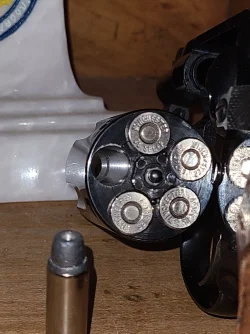
Hard cast is good if the cartridge develops enough power to obturate it. If not, a softer lead is desirable.
Hardness of cast lead bullets is a relative thing. I've been casting since 1973 and have used everything from wheel weights to plumbers lead, window sash weights to linotype metal, Brinell Hardness Numbers from about 6 to 22. In my experience, there is a "sweet spot" for most planned uses.
Standard velocity handgun bullets can usually be made satisfactorily from any available lead or alloy. Magnum velocities usually require greater strength and hardness due to pressures and the heat of the propellant charge.
As an example, I have taken Colorado mule deer, typically 150 to 250 lbs, using .357 magnum with 158-SWC and 150-SWC-HP cast with alloys from about 12 BHN to 22 BHN (pure linotype). In most incidents the bullets have fully penetrated side-to-side, but those I have recovered displayed differences in actual performance, particularly after penetrating bone. Good expansion and weight retention were seen with BHN in the 12 to 14 range. BHN in the 16 to 22 range, particularly the hollow-point bullets, frequently displayed fragmenting and significant loss of bullet weight, rather than much expansion. All of those loads were within the same velocity range., and once again we are talking about thin-skinned and light-to-medium animals, not the larger and tougher stuff like the great bears.
Please note that either result can be very effective on animals. I cannot say definitively that one is any better than the other. Personally, I suspect that bullet expansion may be overly-hyped to a point of exaggerated expectations over many years of repetition by "experts" and advertising gurus.
Some will cry "heresy", I prefer to think it is only my opinion based on a fair amount of experience.