Lobo, you have put down in that post the most accurate description of that essential piece of heliborne combat ops that I could imagine. It is an important read for any one who wants to learn how those ops went down, especially the beginning and the end. "First In, Last Out" Some times things went well, many times they did not. Having been involved in Pathfinder insertions and extractions I know the lonely feeling of picking the spot for you guys and sneaking in, single ship, with no gun ship cover. It was a lot different than coming in with a nine ship formation with guns blazing after a five minute arty prep. And speaking of the arty prep, you guys would be on the ground while the 105 or 155 rounds were hitting, "danger/close". Not conducive to a warm and fuzzy feeling. The motto of the Army flight school at Ft; Rucker was "Above the Best". The best being the guys on the ground, and that's how we saw it and did what we did.
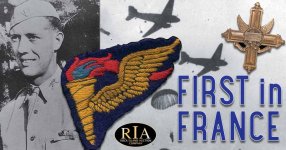
Oh, and by the way, the school patch I wore while instructing at mother Rucker is the pathfinder emblem. Check it out.
I have one of those patches on a cap I use from time to time. The Pathfinders were considered as part of Army aviation during my time. Primary MOS was infantry, airborne qualification required. Pathfinder training included land navigation, map reading, camouflage, survival, escape & evasion, mines & countermeasures, communications (radio & signaling devices), basic air traffic control, capabilities & specs of all the Army aircraft, rigging sling loads for everything from pallets of rations to 105mm howitzers.
Parachute operations were not common in Vietnam, and the emphasis of Army combat doctrine was evolving into air mobility. Pathfinders were among the very few troops who continued to draw "jump pay" in Vietnam as we were expected to deploy by parachute if a mission required that. Jump pay was $55 per month for enlisted soldiers, $110 for officers, which may not sound like much until you compare it to military salaries at that time (my base pay was $248.75 per month as a sergeant E5).
By 1971 the pace of ground combat operations was drawing down. In addition to combat insertions and extractions our Pathfinder unit was also tasked with quite a few rescue and recovery missions for downed aircraft. Our "ready teams" were expected to be in the air within minutes of notification, and it was a race against the bad guys to get to a shot down helicopter (or USAF, USMC, and USN combat aircraft), extract the crews, and either recover the ship or destroy it in place. No "sneak and peak" involved, go in with everything we could put together while on the way, and ready to call in the wrath of God (gunships, fast-mover ground attack aircraft, artillery, mortars, rockets, napalm, whatever we could get to suppress the bad guys while we took care of business). Priorities were live crew members first, KIA second, classified stuff (encrypted radios, code books, maps, etc), salvageable equipment last (or destroy to avoid leaving anything the bad guys could use).
In Army airborne units there was a term used to describe missions and events called the "pucker factor", which was a measurement of just how far up inside the gut your anus could go.
After action debriefing and reports were a required part of every job. As a team leader I spent quite a bit of time with sharp young lieutenants from G-1 drafting the narratives for decorations and awards. Lots of Purple Hearts, Army Commendation Medals, Bronze Stars, couple of Silver Stars, and the Air Medals and a DFC or two for the aviation crews. Of course, after a few staff officers got finished with all the embellishments necessary for such things, no one could ever remember the events described in the appropriate superlative military manner.