Muzzle flash

Mikeinkaty

Member
Joined
Sep 1, 2016
Messages
329
Reaction score
134
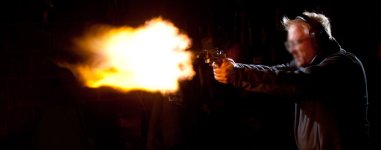
Am I correct in thinking that excessive muzzle flash is caused by powder burning outside the barrel?

I was on an 8" Howitzer crew in the army. After a fire mission one night the powder monkey forgot to put the lids back on some of the unused cans. There was a heavy dew the next morning and the next fire mission produced some flashes of biblical proportion! They were knocking the entire crew flat on our butts! I got busted eardrums from it.

So, now that I'm reloading I have been wondering if the high humidity of Houston can cause the same thing to a lesser degree.

Also, how does one determine what powder is best for a particular barrel length to prevent excessive flash?

Mike
 
Do you leave your powder canisters open for days so that they can absorb humidity? Once loaded, a cartridge is fairly well sealed from the environment. It would take significant exposure in very harsh conditions to achieve what occurred with your open cans of powder. The absorbed humidity slowed down the combustion process.

When a powder does not finish combustion prior to the projectile base clearing the muzzle, the remaining propellant comes in contact with air and there is usually a visible muzzle flash.

Canister powders (what is sold to hand loaders) traditionally do not contain a flash suppressant.

As a hand loader if you want to limit muzzle flash you need to choose a powder that achieves full combustion prior to the end of the barrel. That means using the faster powders

For example, Unique achieves full combustion in 3.49" of barrel. Bullseye achieves full combustion in 1.76" of barrel. AA #2 only needs .7" for full combustion.

This is great for target loads, however when you want FULL POWER from a modern Magnum you need a slower burning powder. H110/296 does not achieve full combustion until well in excess of most hand gun length barrels.

If shooting a revolver, there will still be flash from the barrel/cylinder gap when the combusting propellant comes in contact with the air. Presuming you are not using a powder that had flash suppressant added to it

This is why PREMIUM Defensive handgun ammunition from the major manufacturers usually contains a flash suppressant. Bargain white/yellow/green box and foreign ammunitions do not use suppressant since keeping price low is tha main objective.

There is a big calculation in the science of Internal Ballistics to determine the "All-Burnt" travel distance. There are many Internal Ballistics programs available that can give you numbers.
 
My experience as a newbie reloader is that some powders simply have more flash than others. I use Power Pistol in 9mm and 40 and it does tend to produce more flash. As said, if you're leaving powder in your powder measure when not loading or leaving the canister open for extended periods of time you're just asking for trouble. Just opening the canister to fill the powder measure won't cause any problems unless you live in a rain forest.
 
Well then, you will probably want to stay away for these loads
in any of your short barrel revolvers.


5qgj.jpg
 
Excessive water content will slow the burning rate of powder. It's probably not significant unless the powder is noticeably damp.

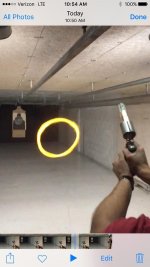
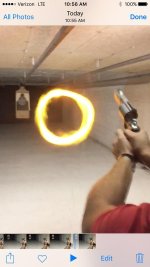
Unburned powder will cause muzzle flash, usually accompanied by sparks. Even with complete ignition there is not enough oxygen in the compound to completely burn all gases. If the temperature is high enough, which can occur if the gases are compressed by a shock wave (big orange doughnuts), they can ignite on contact with the atmosphere.

Compounds like diphenylaniline and potassium chloride are added to inhibit re-ignition, at the expense of producing more smoke.
 
Ever since that experience in the army I always keep my powder dry! My shop is air condition so that helps keep the moisture down in the summer. I only have my containers open when pouring powder out, or in.

I have a table rating the common powders by speed of burning. But, I have never seen anything rating them to barrel length. Are there online calculators around that will let you plug in the most necessary parameters? Point me there if you know of one. I will only use H110 for my 20" rifle. I realize it is far to slow for a 3" barrel.
 
Here's my take on the subject. I loaded .223 rounds with H335 well under max load, and had a 2 foot muzzle flash. Then I switched to W748 with a mid range load, and had no muzzle flash to speak of. So I guess its just the make up of the powder .Some are more flashy than others.
 
You want to...limit...muzzle flash?

Sorry, doesn't compute.

No where did I say I wanted to limit muzzle flash. I'm just interested in what causes it, and should one try to select a powder that better matches to barrel length. Seem to me that it would be more efficient to have the last of the powder burn just as the bullet leaves the barrel. Just trying to learn.
 
I know, I am poking fun.

And it depends on what you consider efficient. You could have a charge with a tad bit of muzzle flash, that's more efficient than another charge that doesn't burn completely.
 
Another thing that can help you with this Mikeinkaty, is to look in a manual that has both short and long barrel data in the same caliber with the same powder and projectile. For instance, the cast bullet handbook has very similar loads for handgun and carbine in .357 magnum. With the slower powders it's interesting how much more velocity is gained with an 18" barrel versus a 6" barrel. I think the wider the velocity gap between the two with the same charge, it's reasonable to assume that the powder is burning much farther down that 18" barrel.
 
I recently read where cheaper powders or bullets mostly don't contain anti flash additives in order to keep costs down.
But yes the powder burn speed to length of barrel basically determine muzzle flash from what I understand.
 
Type/brand of powder, chamber pressure and barrel length all play a part in muzzle blast.
From my experience the type of powder plays the most significant role and makes the most difference. Some powders are very flashy, some virtually not at all.
I learned this experimenting with 223 reloads out of a short barreled single shot Thompson Center Contender.
 
For what it's worth, I set my iPhone on slow-motion just after sundown and shot 7 rounds of Titegroup, 5.5 grains, 125 grain coated lead bullet, and only had one round that showed a slight flash. I will try Trail Boss next. But both those powders are fast burners. I also tried my Henry with 6 grains of Trail Boss and got good groups at 50 yards. Then tried 6 grains of Titegroup and again got good groups. I think I'm going to love this Henry.
 
. . . Seem to me that it would be more efficient to have the last of the powder burn just as the bullet leaves the barrel. Just trying to learn.
From your questions I think you're really gonna enjoy the handloading journey. With that in mind . . .

A powder that burns 100% just before the bullet leaves the barrel may not produce the lowest charge weight . . . the most accuracy . . . the lowest cost . . . the highest MV.

So if your definition of efficiency includes any of those, last-msec 100% burn may not be the parameter to maximize.

Not trying to argue with what you want to do . . . just want to make sure you don't go down a path that doesn't lead to where you really want to go.
 
I rarely notice muzzle flash while shooting but I shoot at the range in the day time.
That said I have tried BE86 powder which contains flash suppressant.

Recently I have been experimenting with different loads of faster powders such as AA No.2, TiteGroup, VV 320 to find clean burning, accurate loads for the range. Since these powders should fully combust in my handguns, I would assume they produce minimal flash.
 
I will have to admit to having some 'special' loads (light bullet and heavy charge of 296) for my Coonan Classic just for giggles at my outdoor range. On another note, using a bushing compensator virtually eliminated the flash from the same loads. No fun, and a dirty comp. :-)
 
Here's my take on the subject. Some are more flashy than others.

THIS!

I my experiences, loading for night shoots with my AR and pistols, powders with similar load uses on the burn rate scale produce different amounts of muzzle flash.
Example: Load 9mm 124 gr to 1050 f.p.s. with Unique, Universal, #2, WSF, Bullseye, 231, Titegroup, WST & N320. All are mid level loads. All burn fairly clean, but shoot them at night and the muzzle flash is from WOW to "what muzzle flash".

Jeff
 

Latest posts

Back
Top