SPLITTING HAIRS

M&PEE

Member
Joined
Apr 23, 2011
Messages
39
Reaction score
1
City & State/Province
S.E. PA
I know I may be a little anal but i think everyone iv have met in reloading is..and probably should be to an extent. My question to all the reloading gods is, why is actual factory brass any where from .008 to .013 shorter than the listed length (every manual I own anway) of .7540 for 9mm Luger. Just wondering.:rolleyes:
 
I don't know why the brass lengths are what they are, I have noticed it though from time to time. I guess we can just make sure all the brass we use is consistent for ideal seating and crimping.
 
If the manufacturer tried to make the brass exactly the maximum length, inevitable variation would make some of it over max, and possibly cause chambering problems. Therefore the nominal manufacturing length is always shorter than max.

Why pick .010" under max for nominal? Well, why not?
 
yes we can really be sticklers about some reloading endeavors if not most reloading endeavors ... but for those of us who aren't, the short case helps keep Bubba outta trouble.
 
.010" multiply that times a couple of hundred thousand cases, adds up.
 
There's maximum cartridge length, trim to length, fired length, re sized length all of which may be different by a couple thousandth inch.

Rifle cartridge brass mostly stretch with firing and subsequent resizing so their length grows and will need trimming at times.

Handgun brass usually shrinks with firing and resizing so generally there's no need to trim handgun brass.

In the overall picture the acceptable tolerances in ammunition are quite generous and measuring or agonizing over a couple thousandths is often a colossal waste of time and effort that doesn't yield any different results in accuracy or utility.

I long ago adopted the philosophy that a difference that makes no difference is no difference at all.
 
I'm not a "god" but a newbie who likes reading. I like to throw stuff out like this just to get corrected and learn...

I believe the factories are trying to alleviate a minimum headspace problem in some of their customers firearms. The shorter cases are probably preventive measure. Minimum headspace problems could lead to problems with bolt functions.

If I'm wrong, please correct me.
 
Last edited:
There's maximum cartridge length, trim to length, fired length, re sized length all of which may be different by a couple thousandth inch.

Rifle cartridge brass mostly stretch with firing and subsequent resizing so their length grows and will need trimming at times.

Handgun brass usually shrinks with firing and resizing so generally there's no need to trim handgun brass.

In the overall picture the acceptable tolerances in ammunition are quite generous and measuring or agonizing over a couple thousandths is often a colossal waste of time and effort that doesn't yield any different results in accuracy or utility.

I long ago adopted the philosophy that a difference that makes no difference is no difference at all.

What he said. Reading the numbers in a book is one thing, practical reality is another. The "standard case length" for the 45ACP is .898".........I have yet, in 30 years, to find one that long. If the difference is less than ten or fifteen thousandths, don't worry about it!
 
gsparesa, the only problem with that theory, which does sound reasonable, is that in automatics, the round headspaces on the case mouth, and if the case is too short, the extractor may fail to catch the round and it can fall so far forward into the chamber that the firing pin may not fire the round. Case lengths are not really as critical in pistol as rifle ammo, but they do need to be somewhat consistent.

In short, I have no idea why factory brass is shorter. As OKFC05 said, it's easier to make it shorter rather than worry about a few pieces being too long so as to cause chambering problems. Obviously the manufacturing process allows some variation, so they choose to make the average shorter to accommodate the variation on the longer side.
 
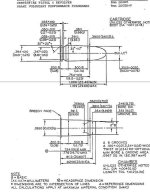
The case length of 0.754" shown in your reloading manuals is the MAXIMUM allowable case length for the 9mm Luger as specified by the Sporting Arms and Ammunition Manufacturers' Institute (SAAMI). This also happens to be the MINIMUM specified length for the 9mm Luger chamber (to the point where the case headspaces).

SAAMI's specification for the 9mm Luger allows far a case no longer, but up to 0.010" shorter; conversely, no shorter chamber is allowed, but it could be up to 0.022" longer. So, it is possible for there to be up to 0.032" of 'wiggle room' fore-and-aft in the 9mm Luger chamber (and for the other pistol cartridges that headspace on the mouth, as well), which the SAAMI members seem to agree is, as far as funtionality and reliability purposes, as stated above by SteveC a "difference that makes no difference at all." Besides, the manufacturing cost involved in producing cartridge cases to precisely meet SAAMI's maximum, without EVER going over, would be prohibitive, and the price of a box of your favorite cartridges would be astronomical.

Of course, for the best results in consistency and accuracy (both on the reloading bench and at the range), cartridge cases should be trimmed to the same length.

TL
 

Attachments

  • SAAMI 9mm LUGER.jpg
    SAAMI 9mm LUGER.jpg
    72 KB
I know I may be a little anal but i think everyone iv have met in reloading is..and probably should be to an extent. My question to all the reloading gods is, why is actual factory brass any where from .008 to .013 shorter than the listed length (every manual I own anway) of .7540 for 9mm Luger. Just wondering.:rolleyes:

I hesitate to answer because of the way the question if formulated. I am surely not any kind of god, big g or little g!

I do like to reload and I have a guess as to why this is true. The main reason is economics. Brass is expensive and even a little off of each case will save in the long run.

It isn't just factory ammo either, buy anyone's.

FWIW
 
Brass begins life as a pellet that is drawn into its shape. Just a little variance in the size of the pellet will affect the final length. I have some 9mm American cases (AMERC headstamp) that the mouth is noticably wavy, something I've always thought was their way of increasing profits.
 
My understanding of the shorter factory bullets is so they work in a greater number of guns.
 
Back
Top